One technical idea per video. Full evidence one click away.
Explore 76 native-English explanations published on 5sigmas. Every watch page connects the short explanation to its original chapter and related material.
76 videos available
 2:12
2:12
Data, permissions and consequences
Correctly reading an instruction does not give it authority to change permissions.
1. Visual prompt injection · 2. System leakage and tool manipulation 2:14
2:14
Measuring distinct capabilities
IoU is 0.6: recognizing the class alone would not measure this localization error.
1. What it means to evaluate grounding · 2. The problem of benchmark contamination 2:12
2:12
Connecting representations and models
The system returns a record; writing an answer requires a separate generative stage.
1. Visual encoder + connector + language model · 2. Fusion through cross-attention 2:11
2:11
Learning alignment
The contrastive objective distinguishes those batch correspondences without guaranteeing every pair is correctly labelled.
1. Image–text pairs: the foundation and its limits · 2. Beyond the pair: aligning multiple modalities 2:13
2:13
Structure, resolution and time
If that position answered the question, the reduction already removed the needed evidence.
1. A modality is not only an input type · 2. The problem is not adding modalities, but crossing them without destroying them 2:10
2:10
Preserving evidence across modalities
That caption lost a spatial relation needed to answer where each object is.
Contents · 1. The real problem: what counts as multimodality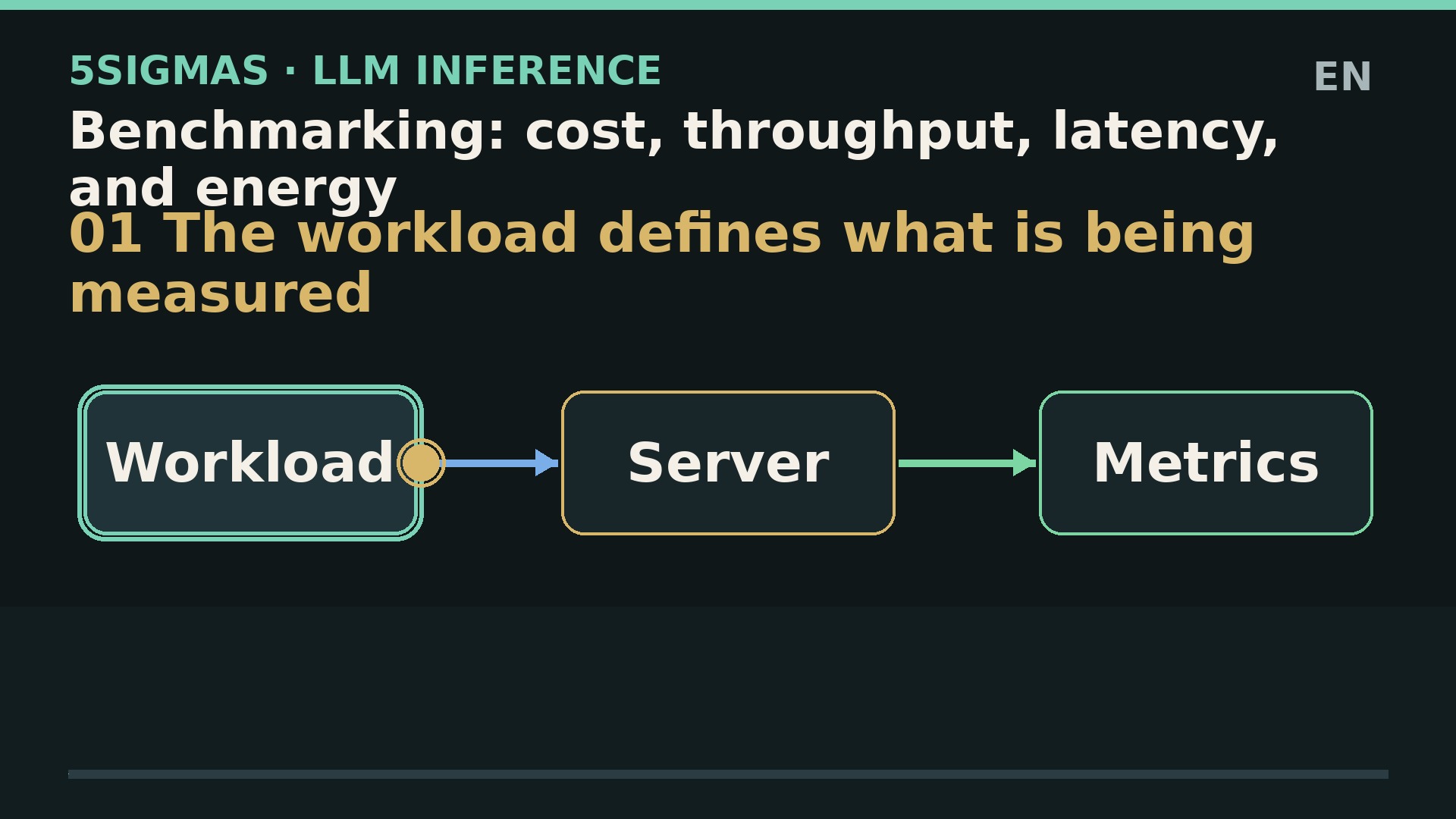 2:15
2:15
Measure the complete system
These are different experiments: the second can reduce arrivals precisely when latency increases.
A benchmark is a protocol, not a scalar · The workload should resemble the problem you are trying to solve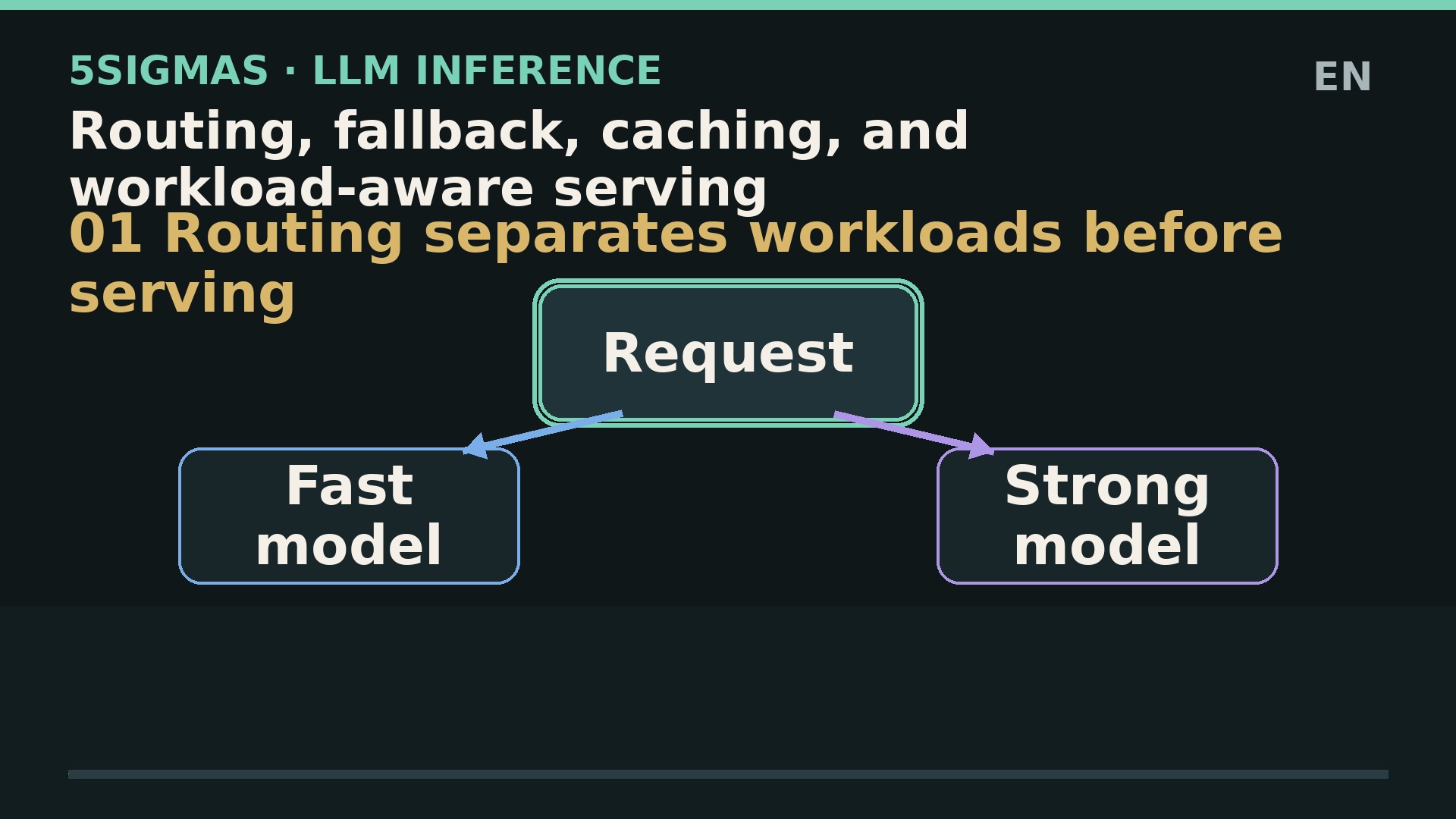 2:14
2:14
Decide under constraints
Selection optimises within the eligible set. A cheap but incompatible alternative is not a valid option.
Policy starts with what it cannot choose · Model routing chooses before the first attempt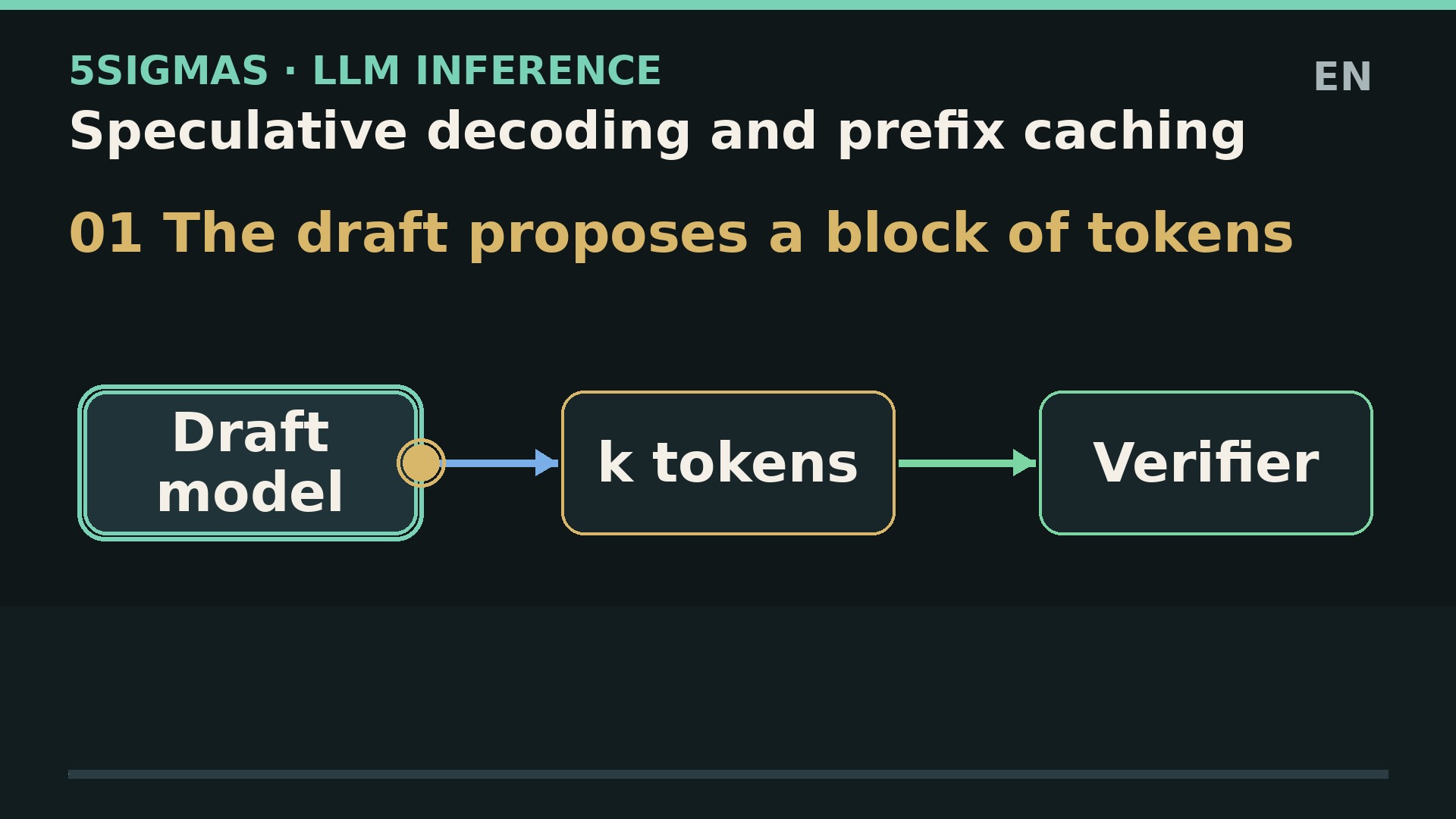 2:15
2:15
Avoid and propose work
The continuation must still be generated. A prefix hit does not retrieve a complete answer.
Start from the latency budget again · Prefix caching reuses state from a previously computed prefix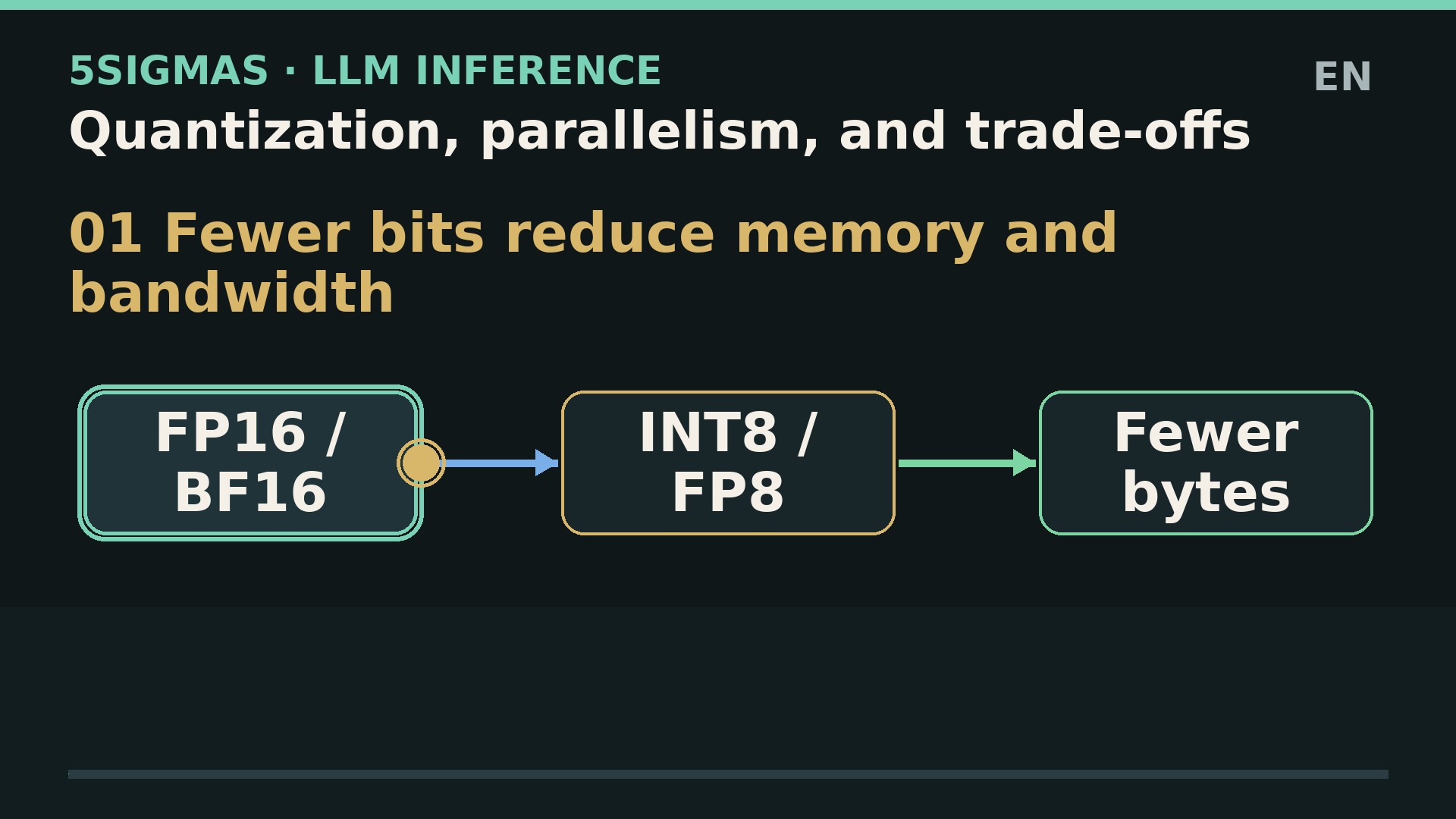 2:15
2:15
Precision and distribution
The error is 0.12. Lower precision requires task evaluation, not just memory accounting.
Quantization does not mean that the whole model has one precision · The basic operation introduces representation error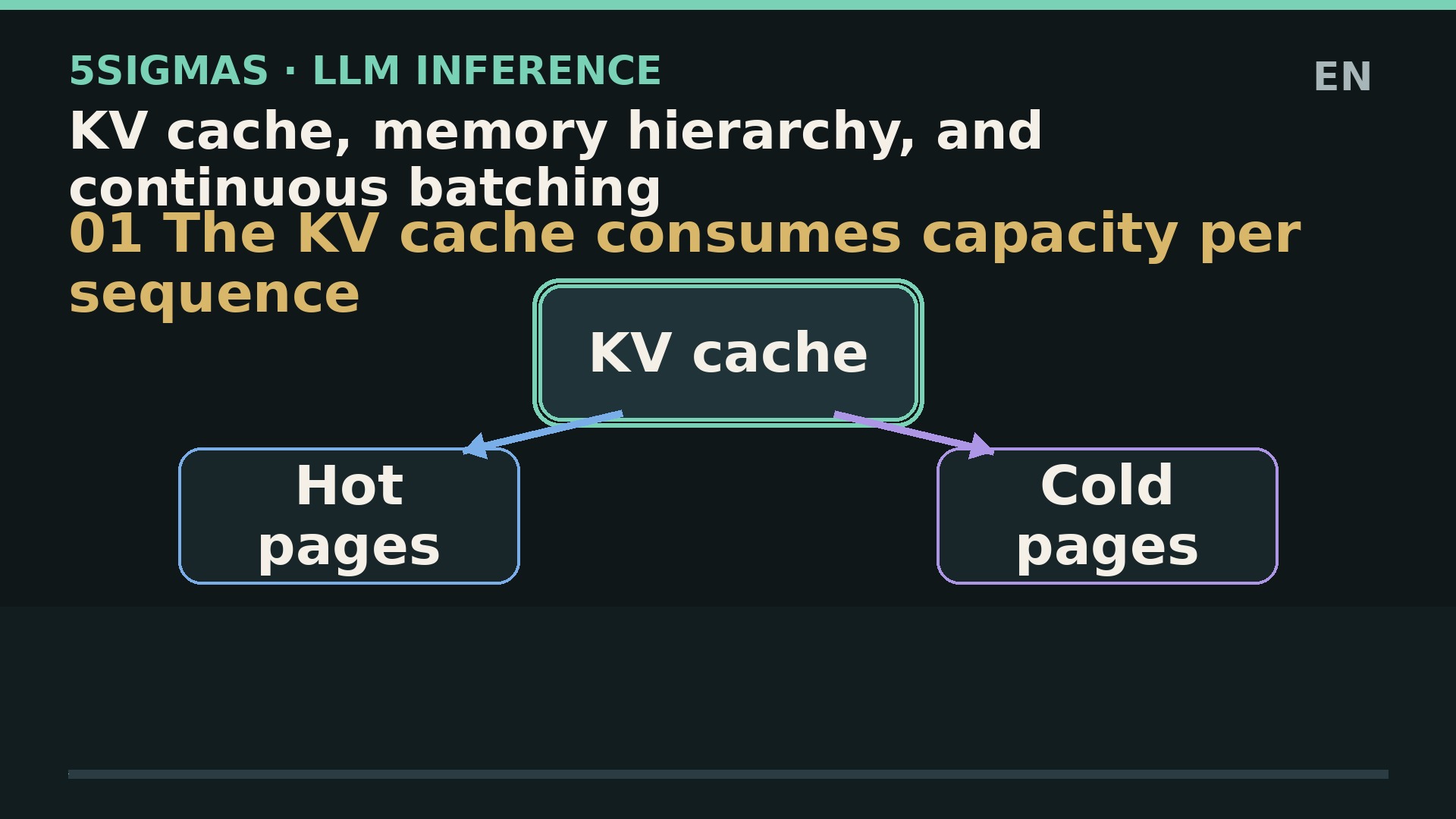 2:13
2:13
State and capacity
For 4096 tokens, KV payload is 512 MiB. Weights and buffers are excluded.
What the KV cache actually stores · A useful memory formula — with explicit limits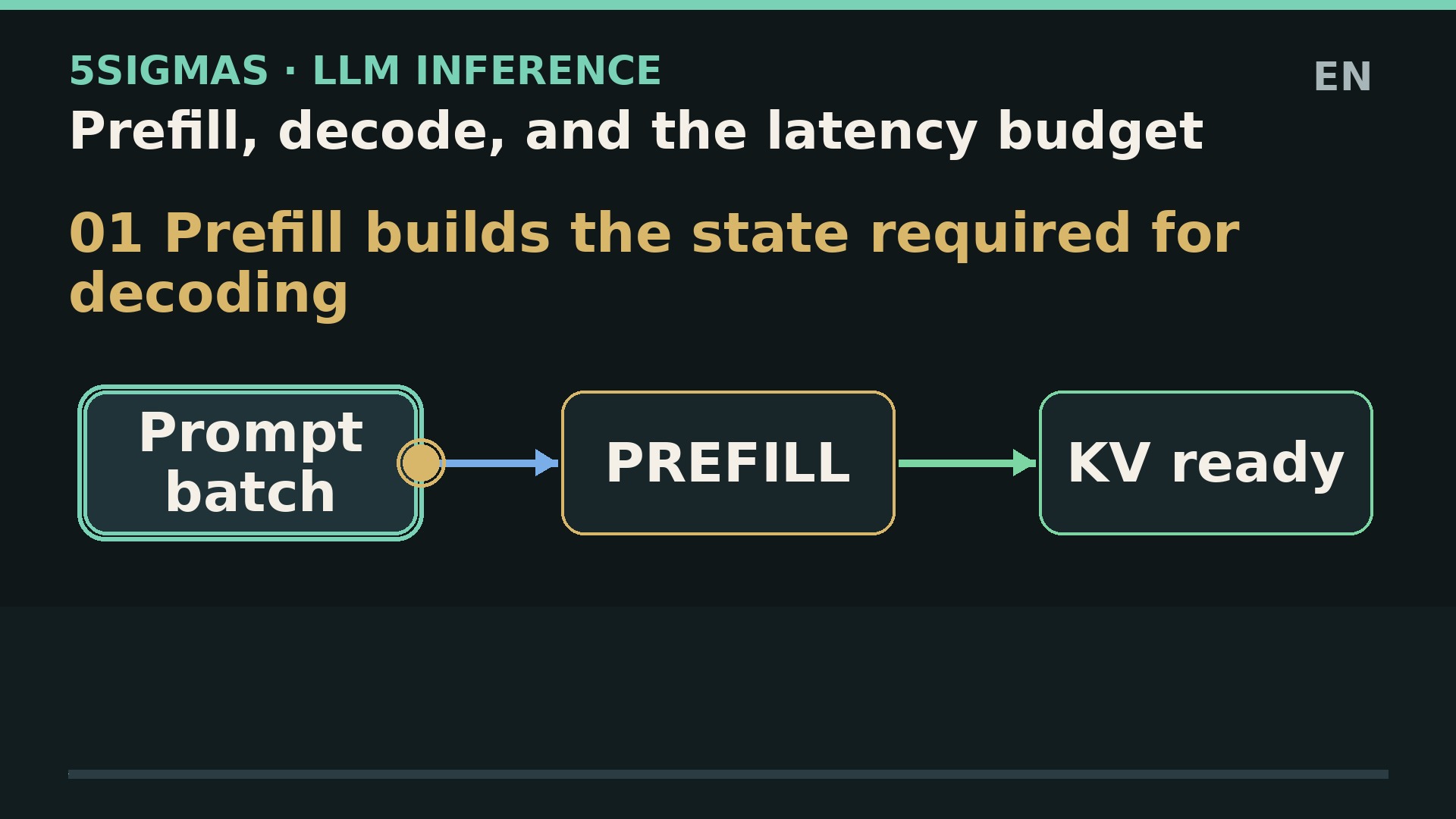 2:13
2:13
The request clock
Long inputs and long outputs add work in different phases. One clock does not distinguish them.
The request changes shape after prefill · TTFT is a client-visible boundary, not one operation 2:12
2:12
Search, memory and action with limits
Search provides alternatives; the verifier provides evidence for this specific criterion.
1. Why the Transformer is no longer a complete map · 1.1 Truth, uncertainty and hallucination 2:11
2:11
Scaling data, computation and reuse
Learning those filters builds representations from pixels.
1. 2012: when scale became central · 2. The Transformer and massive pretraining 2:14
2:14
Learning parameters and representations
Maintenance grows as conditions change; automating a rule does not solve all its exceptions.
1. The age of rules: when intelligence was written by hand · The first symbolic systems 2:10
2:10
Separating instructions, logic and memory
The mechanism represents ten without requiring a person to remember the carry.
1. From automating calculations to programming procedures · The first calculators: automation is not programming 2:11
2:11
Representing quantities, relations and change
Ten marks still represent ten units; organization changes, not quantity.
1. We invented languages to describe the world · Before writing, we were already counting 2:10
2:10
Five changes in how we handle information
The record preserves the quantity after the objects are out of sight.
Contents · 1. Represent (≈ 40,000 BCE – 1700)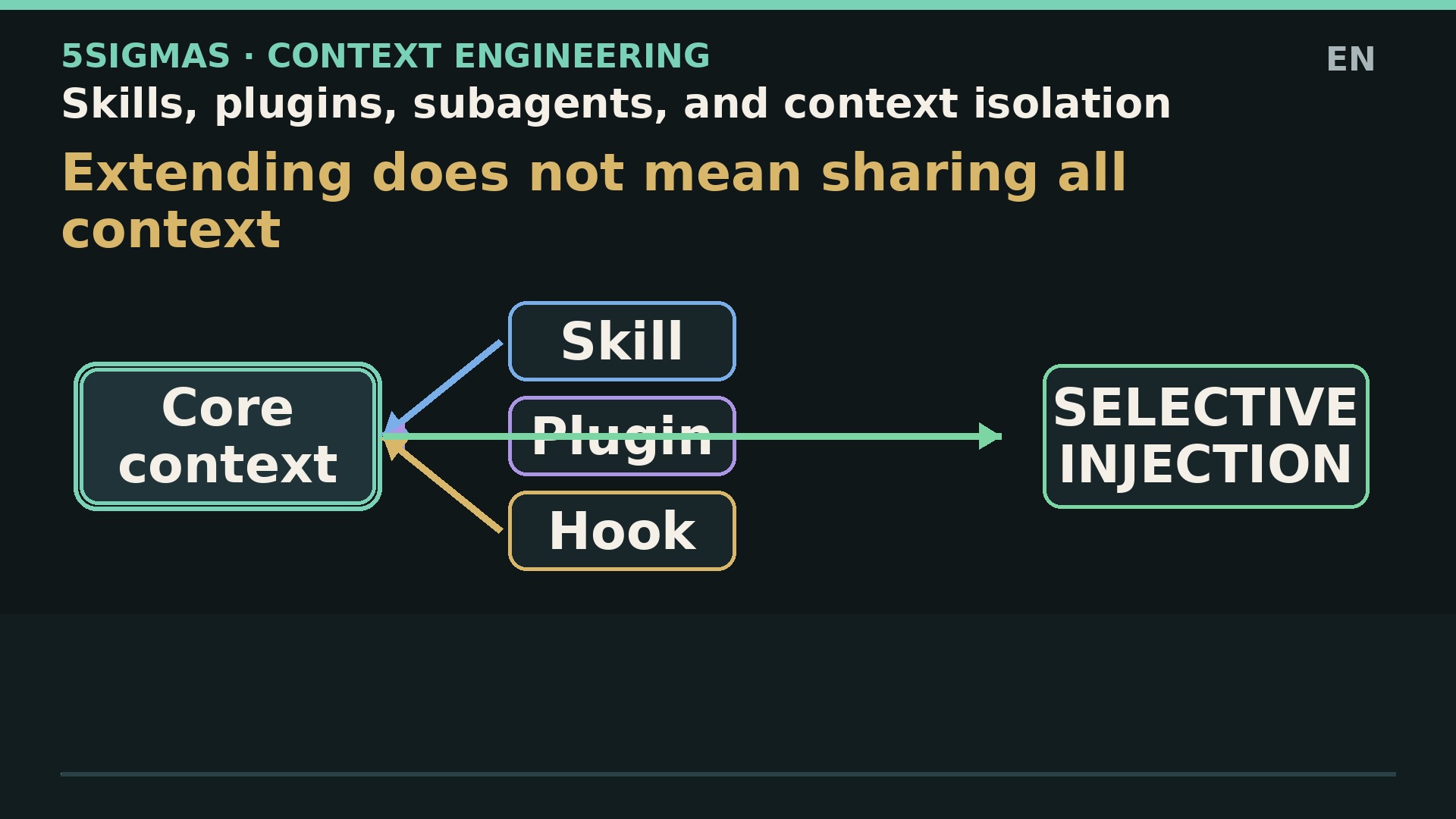 2:13
2:13
Extensions, delegation and controls
Progressive loading limits context. It neither isolates the process nor grants new authorisation.
1. Four primitives, four different questions · 2. A skill is reusable expertise, not a security boundary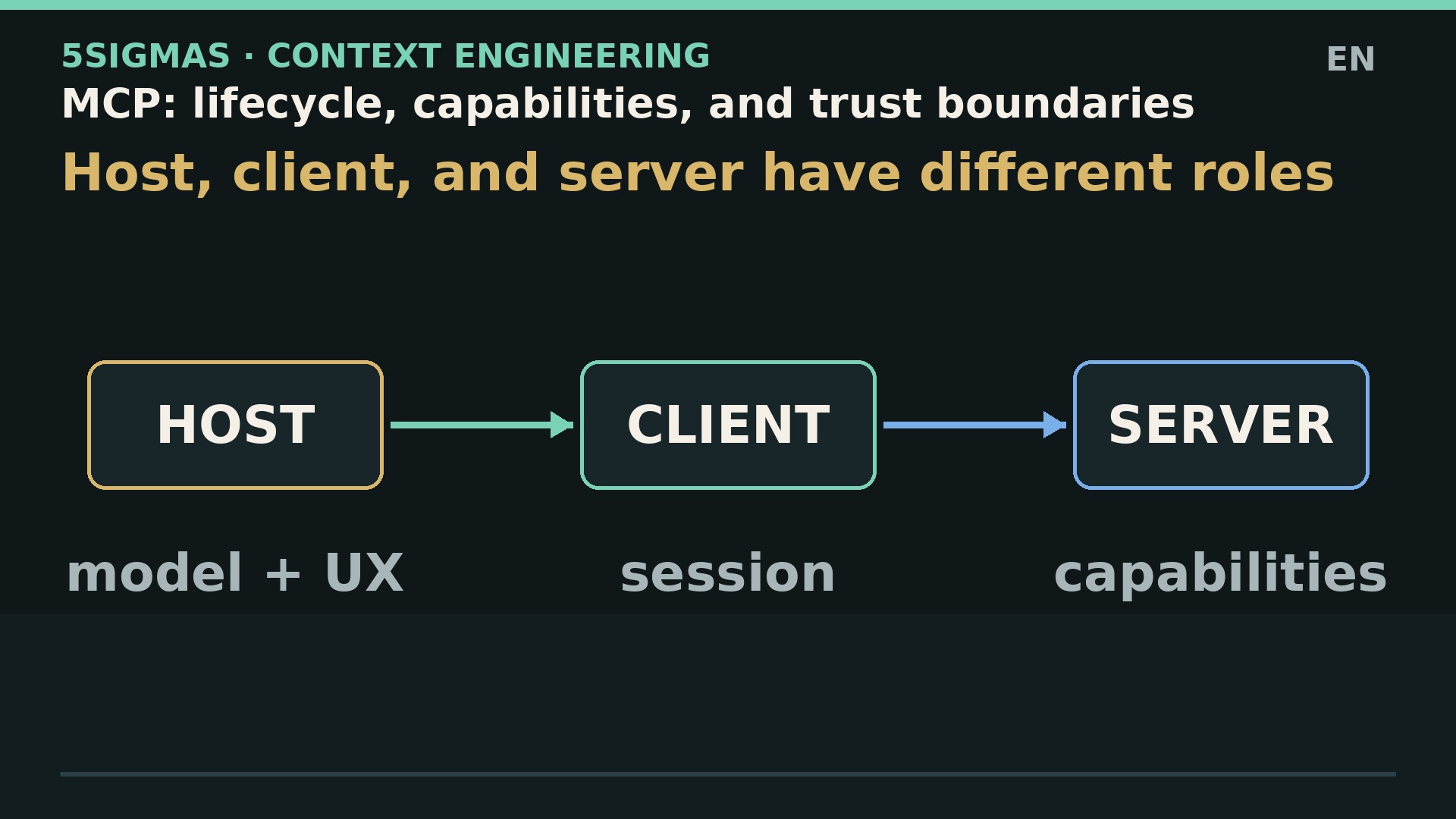 2:14
2:14
MCP: protocol and trust
Connecting two servers does not authorise either to receive the other’s data.
1. Start with ownership: host, client, and server are not synonyms · Host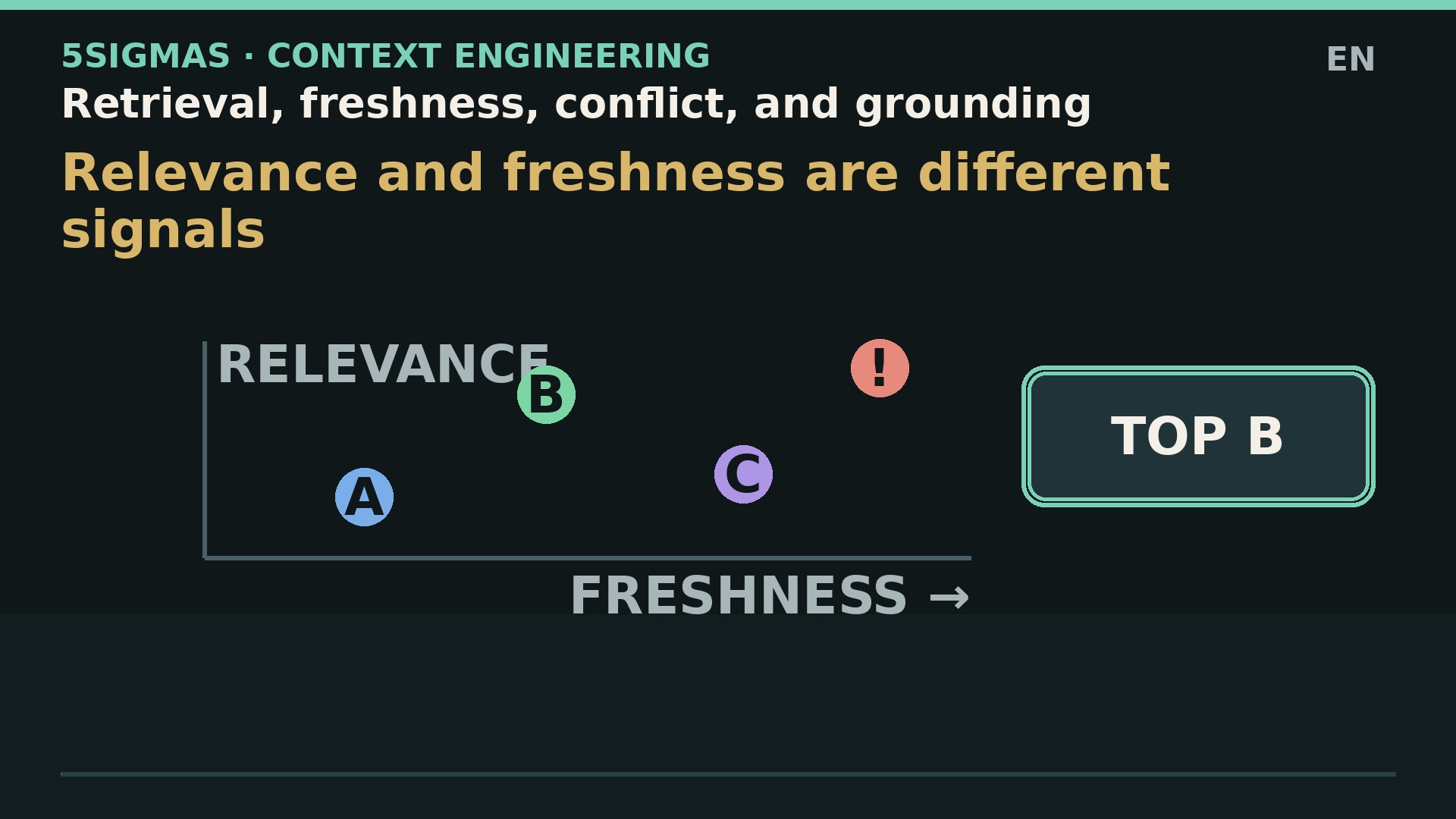 2:14
2:14
Retrieval and grounding
The assembler checks access, revision and authority before using them together.
1. Retrieval is not context assembly · 2. Lexical, semantic, and structured retrieval solve different problems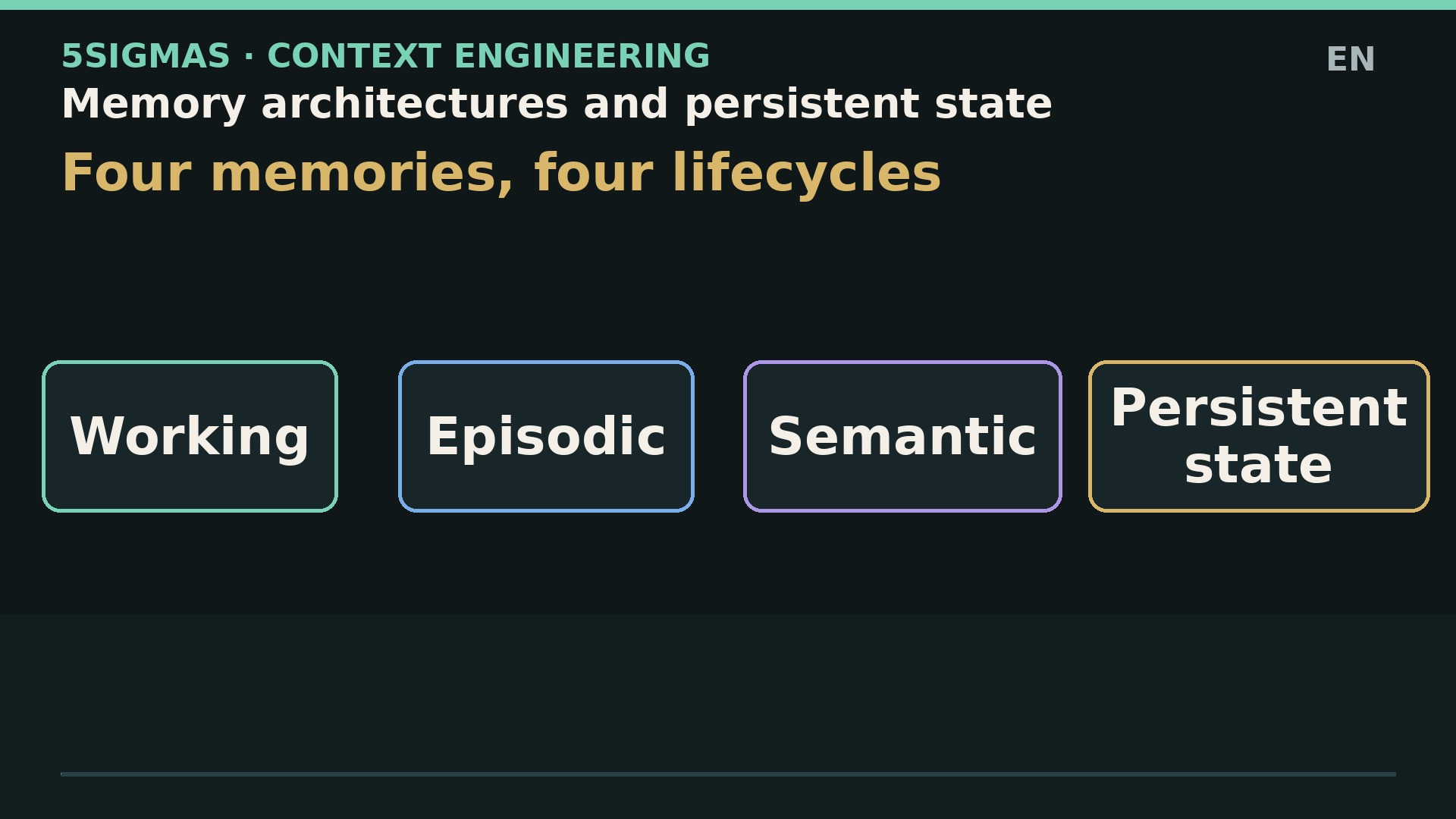 2:09
2:09
Memory and authoritative state
A checkpoint can persist too, but its contract is resuming execution, not learning a preference.
Working state: what execution needs now · Episodic memory: events situated in time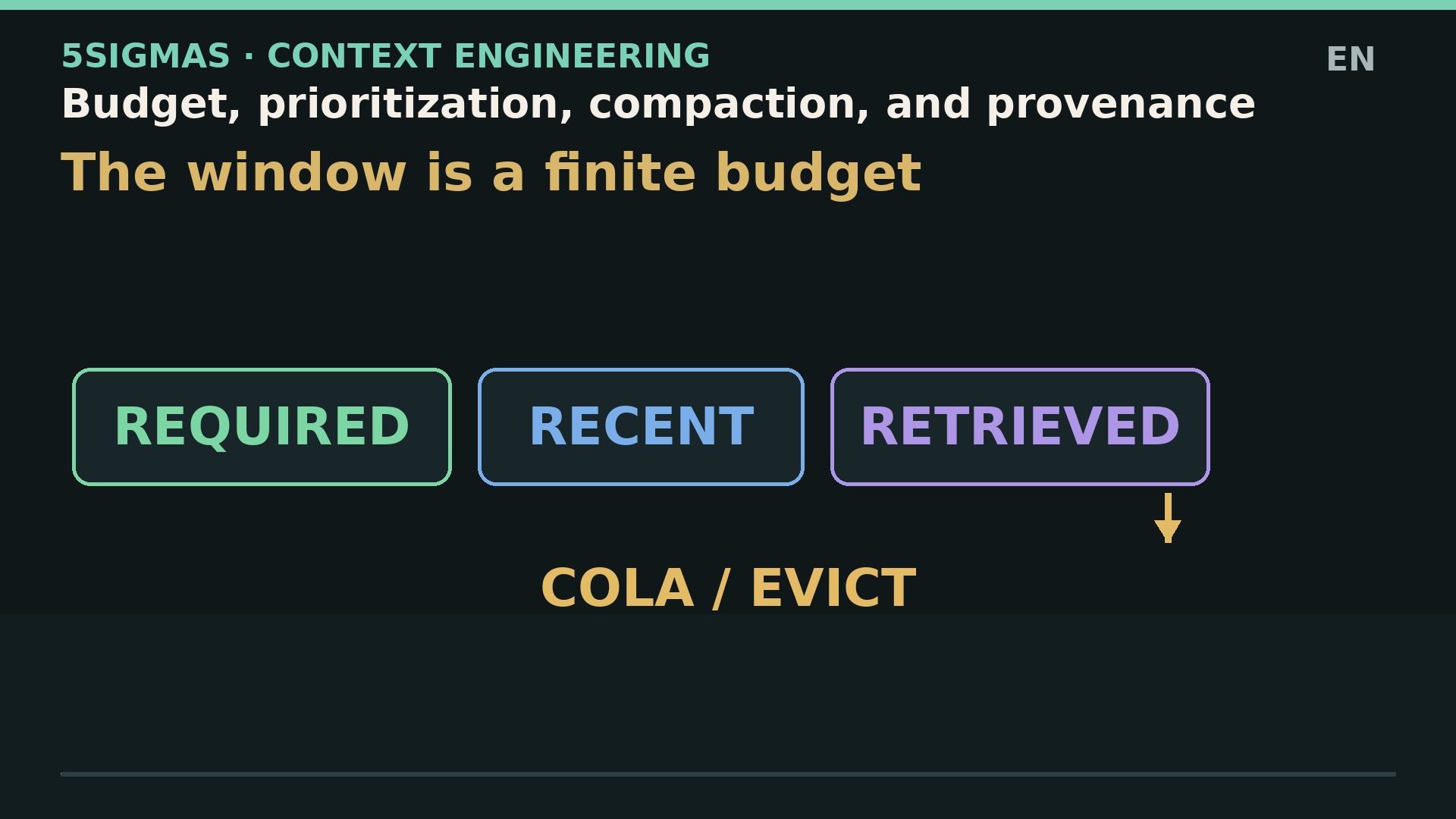 2:15
2:15
Budget and provenance
That leaves 48 thousand for dynamic information. This is not a universal model property.
The maximum context window is not your operational budget · A context item needs more than text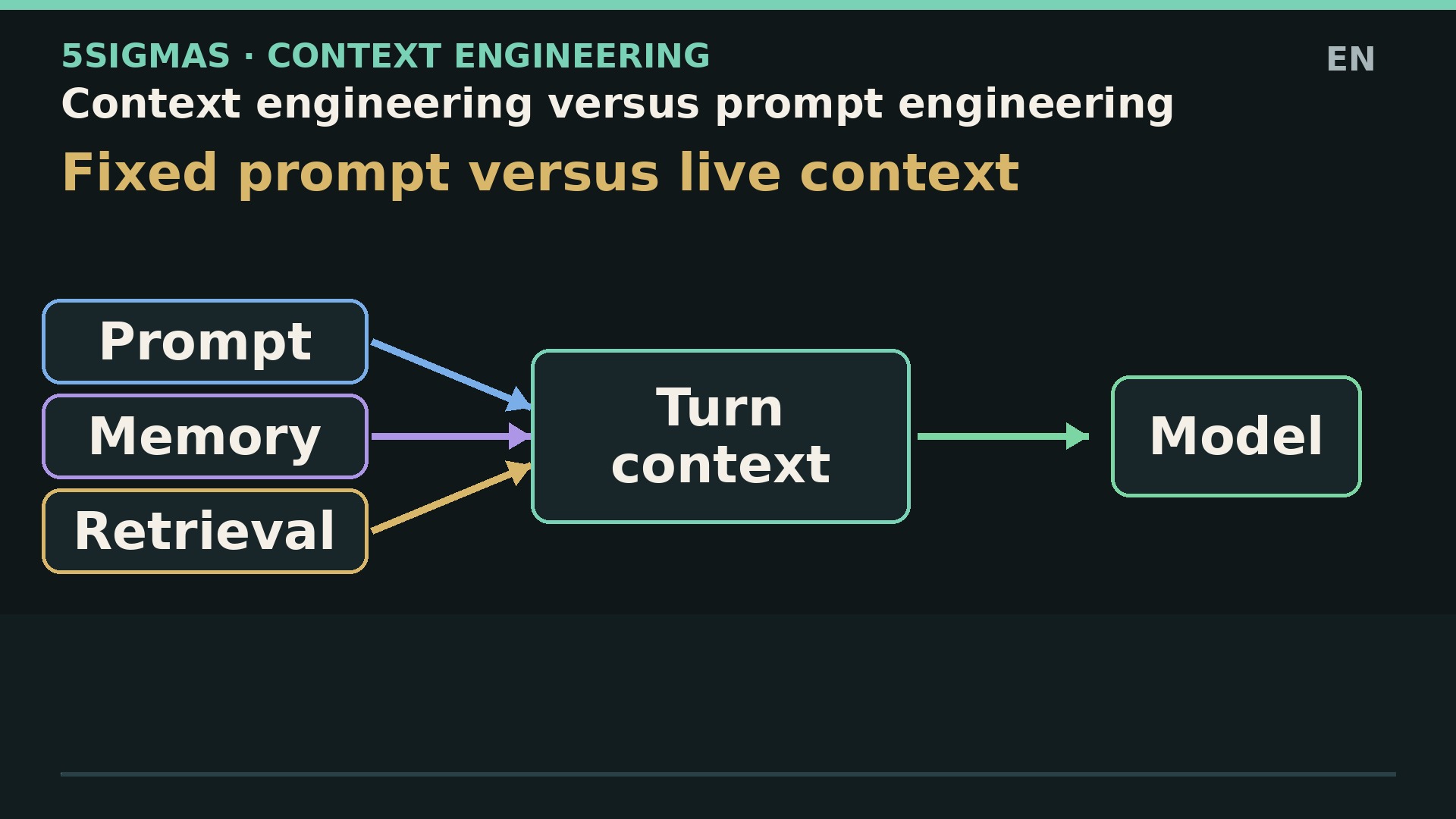 2:11
2:11
What reaches the model
The decision depends on this specific input, not everything held by the application.
First, what does “context” mean here? · Prompt engineering is one part of the problem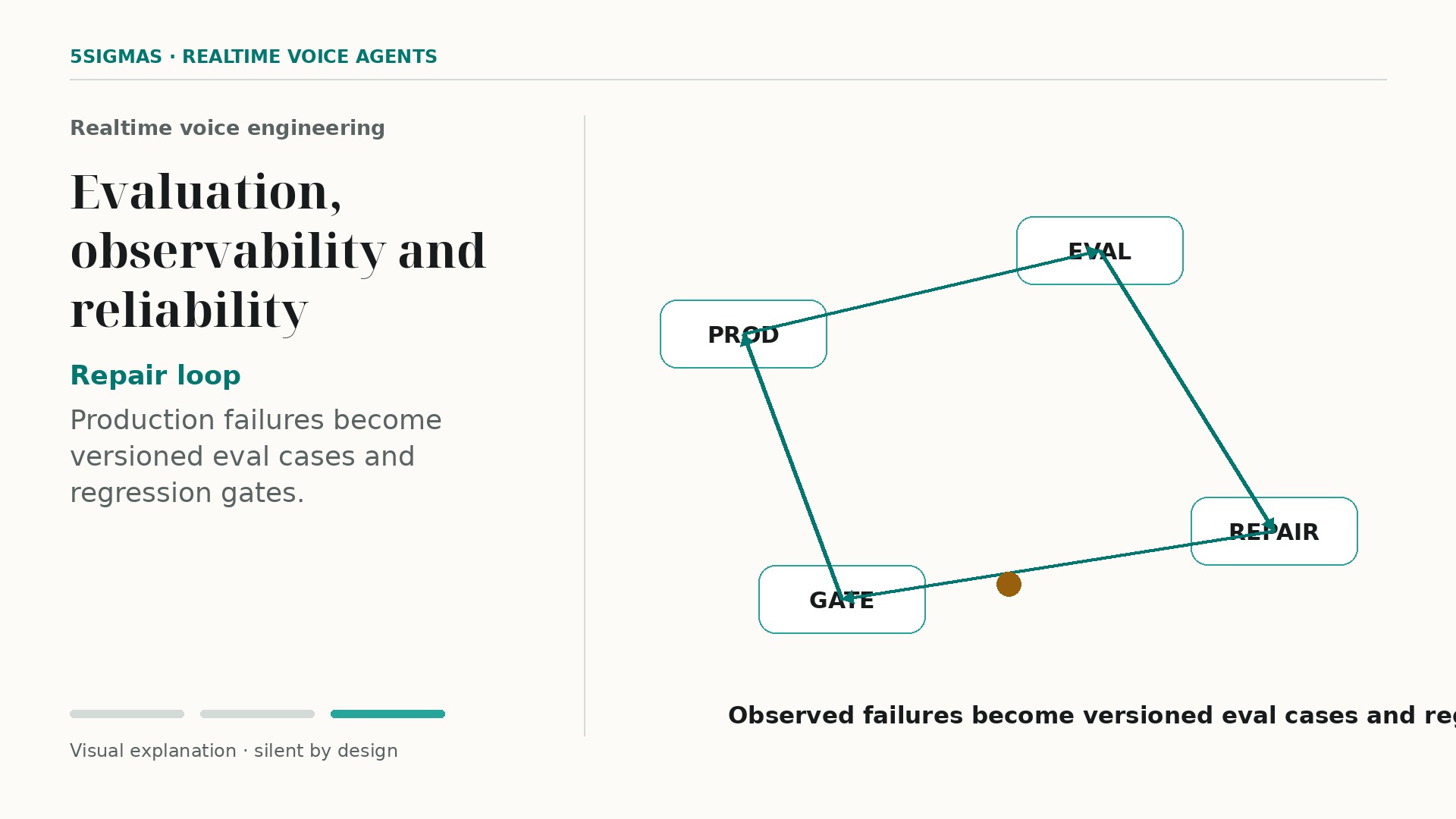 2:19
2:19
Evaluation and observability
Join business, turn, media and runtime evidence. A transcript does not prove the complete outcome.
A transcript is not the system's ground truth · The useful unit of analysis is the logical turn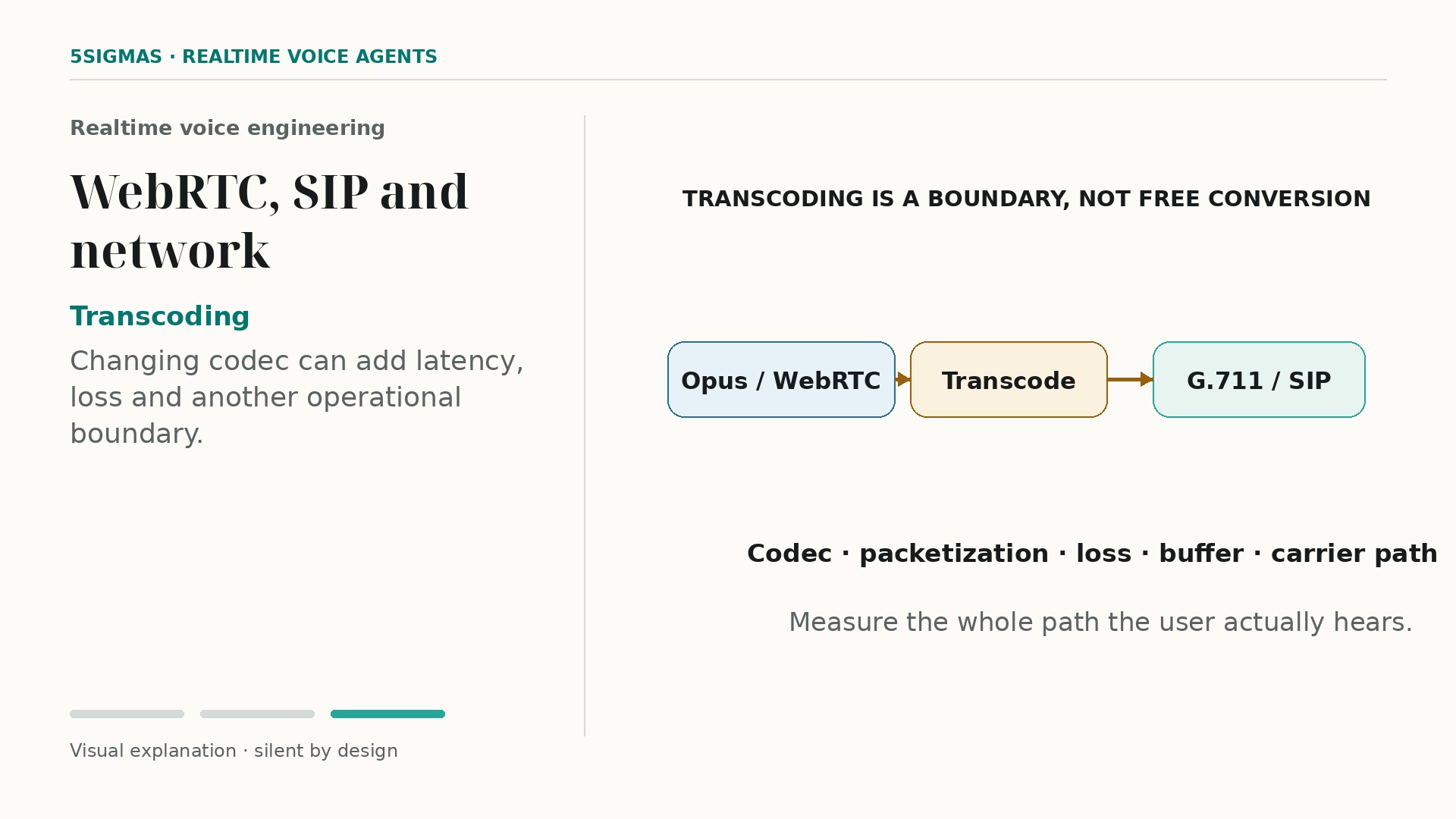 2:19
2:19
Media, networks and telephony
Check each media direction and its codec. Do not diagnose from “connected” alone.
Draw the path before choosing an acronym · WebRTC: the route selected by ICE matters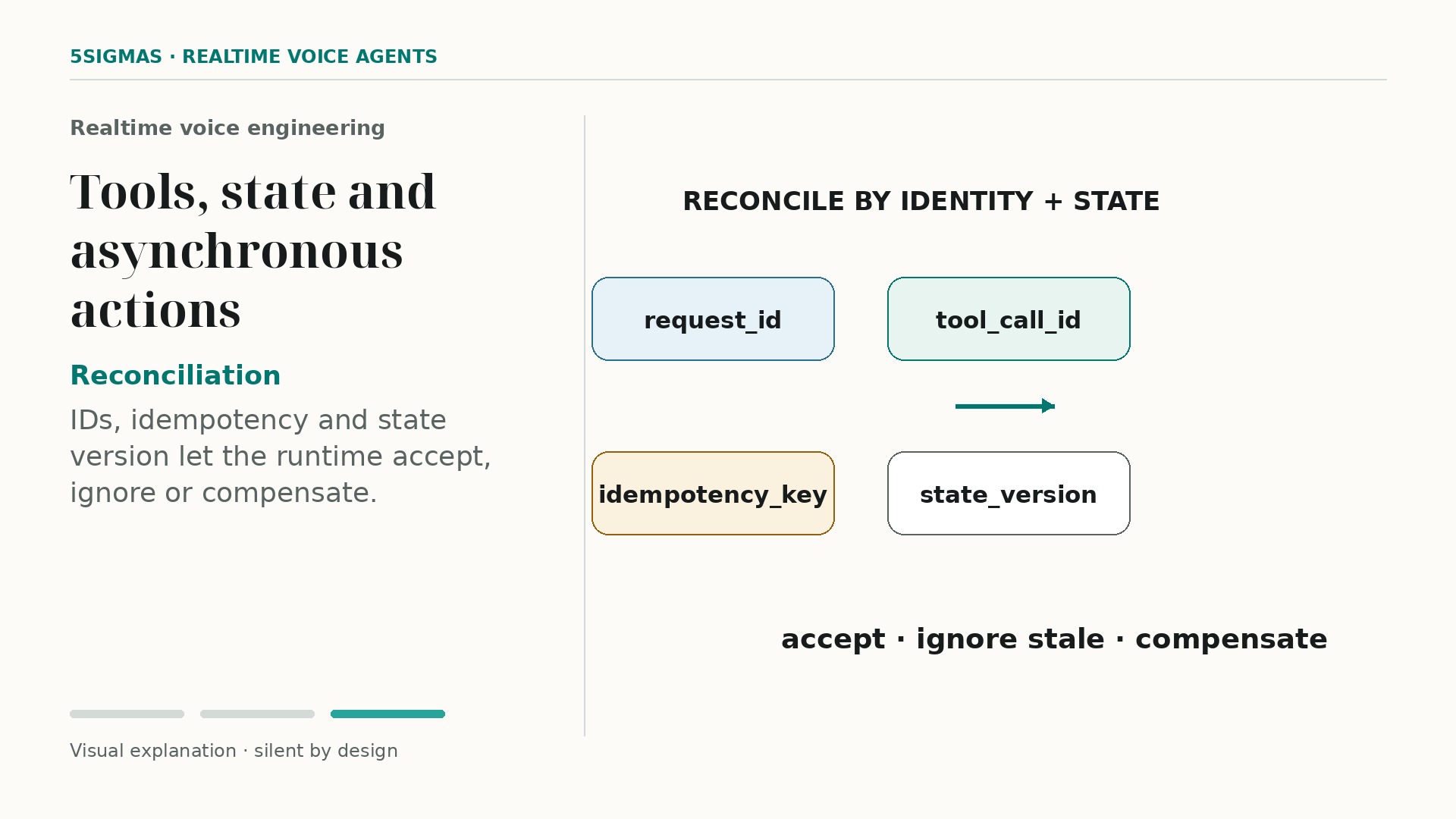 2:19
2:19
Tools and durable state
The conversation reports the observed result. A sentence does not create a booking.
A tool call is not the external effect · Separate four kinds of state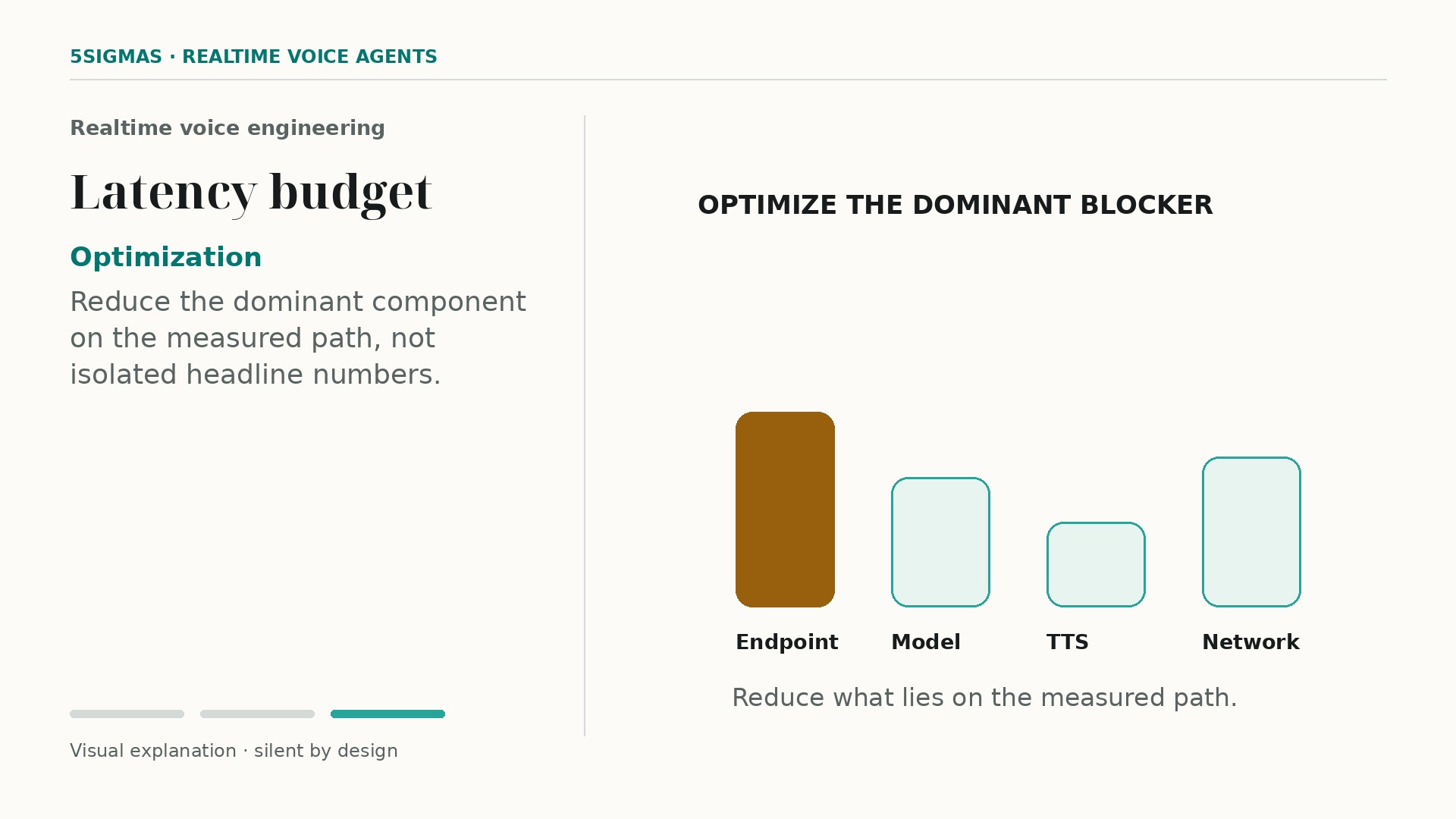 2:19
2:19
Latency budgeting
On the same clock, total waiting is 300 plus 480. It is not the model’s TTFT.
A latency metric needs two explicit boundaries · The clock is part of the definition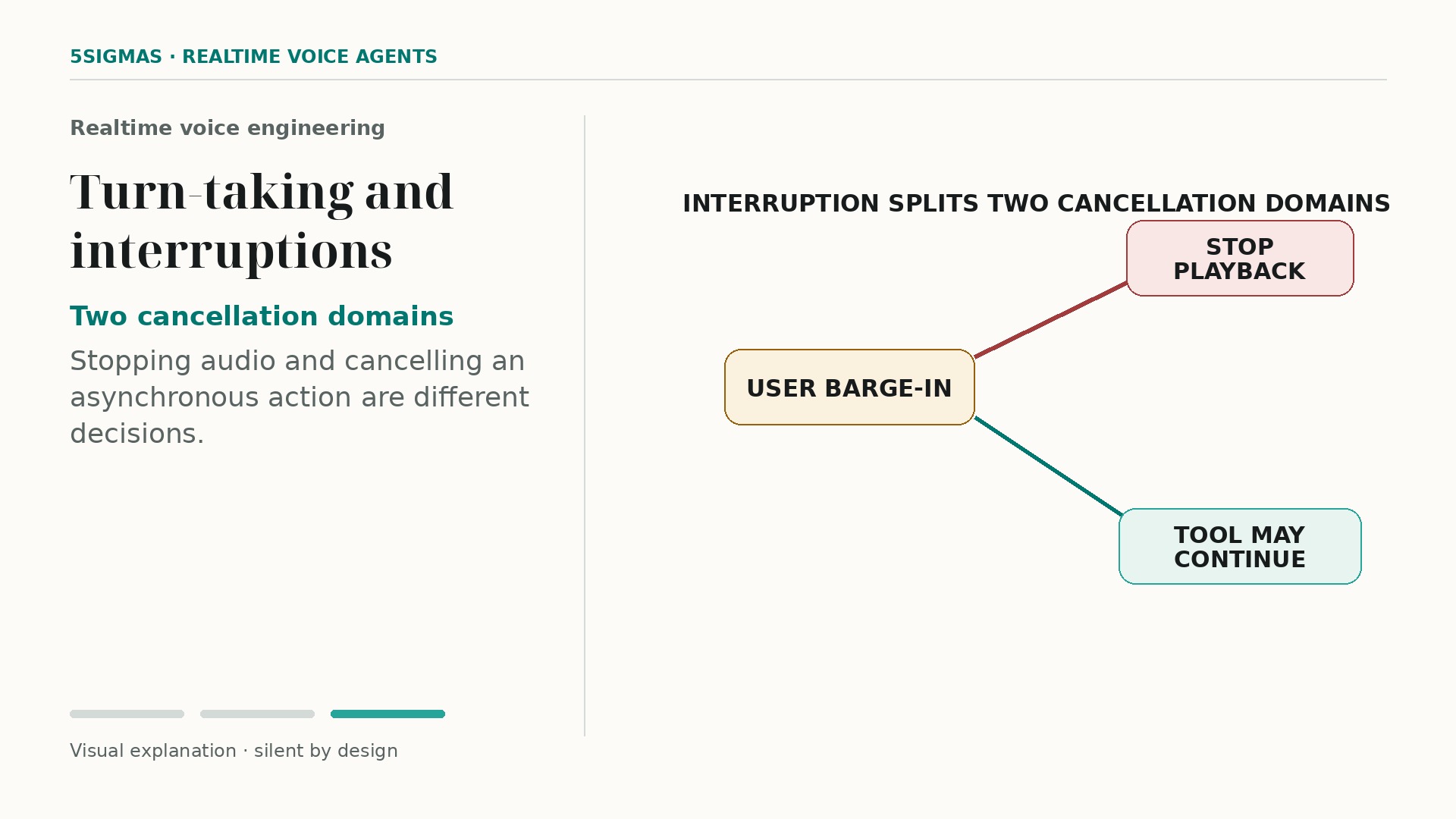 2:18
2:18
Turns and interruptions
VAD detects activity. End-of-turn needs evidence about the complete intent.
VAD answers “is there speech?”, not “is the thought complete?” · A timeout is a policy, not semantic proof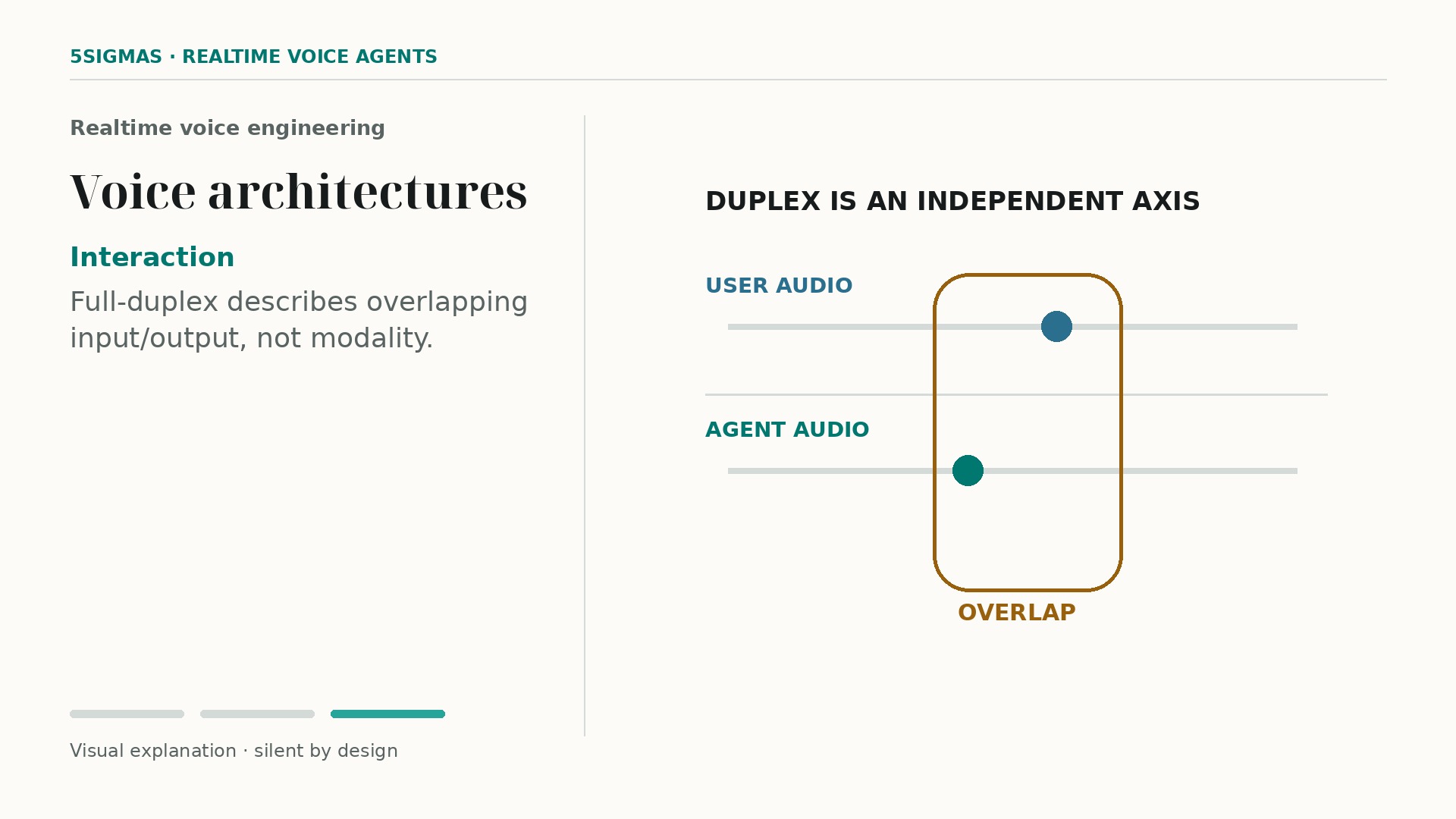 2:18
2:18
Voice architectures
The same turn crosses every stage. The runtime must coordinate their results.
Three modality architectures · 1. Full cascade: audio → STT → LLM → TTS → audio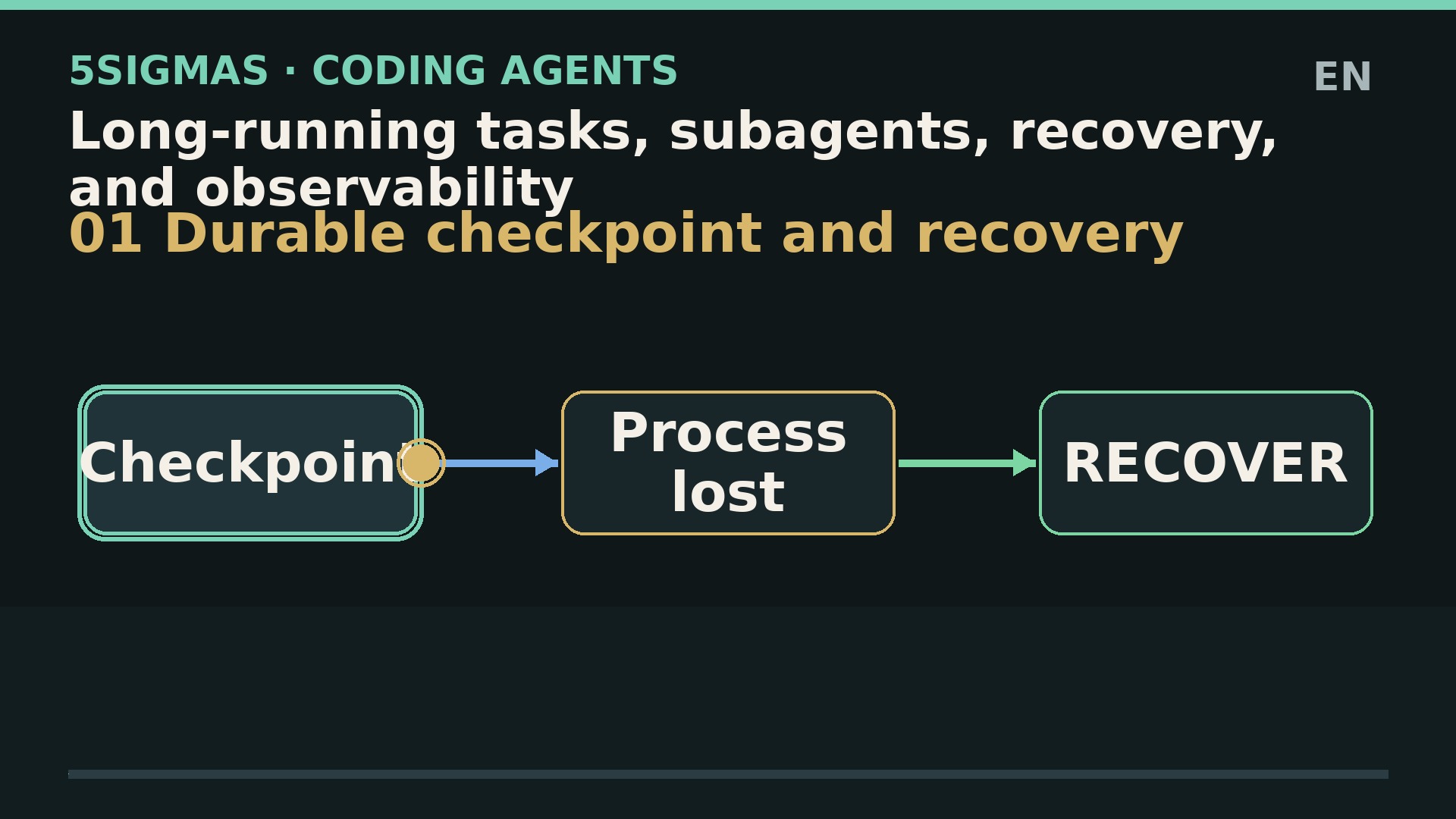 2:15
2:15
Long tasks, recovery and integration
Remote confirmation links T7 to R42 and is recorded separately. An attempt is not a substitute for an outcome.
A long-running task is a durable state machine, not an infinite conversation · “Memory” is not one object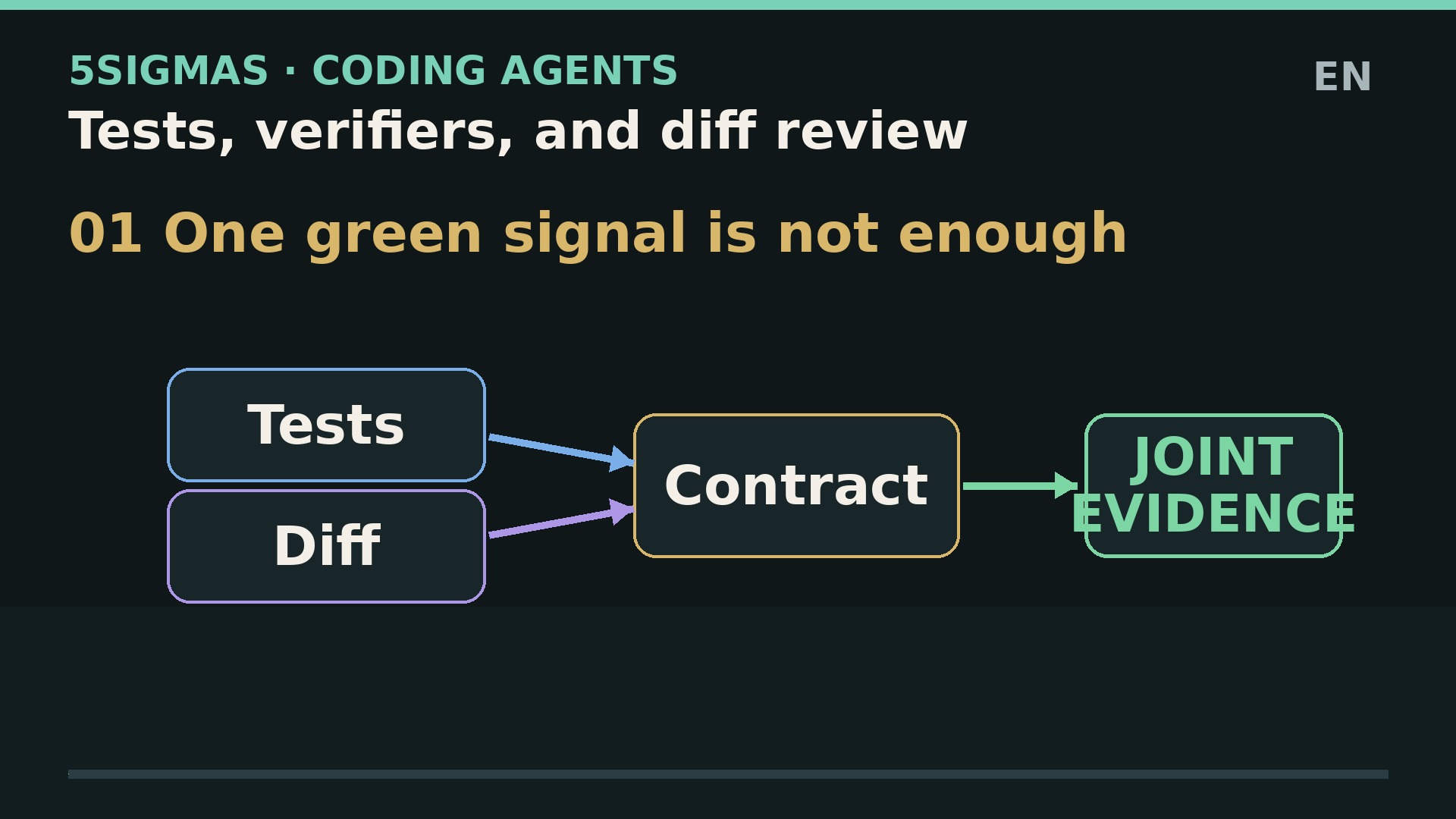 2:13
2:13
Tests, verifiers and stop conditions
Diff review asks another question: what actually changed, and was it permitted?
Tests, verifiers, reviewers, and stop conditions are different objects · “The tests pass” only means something relative to a contract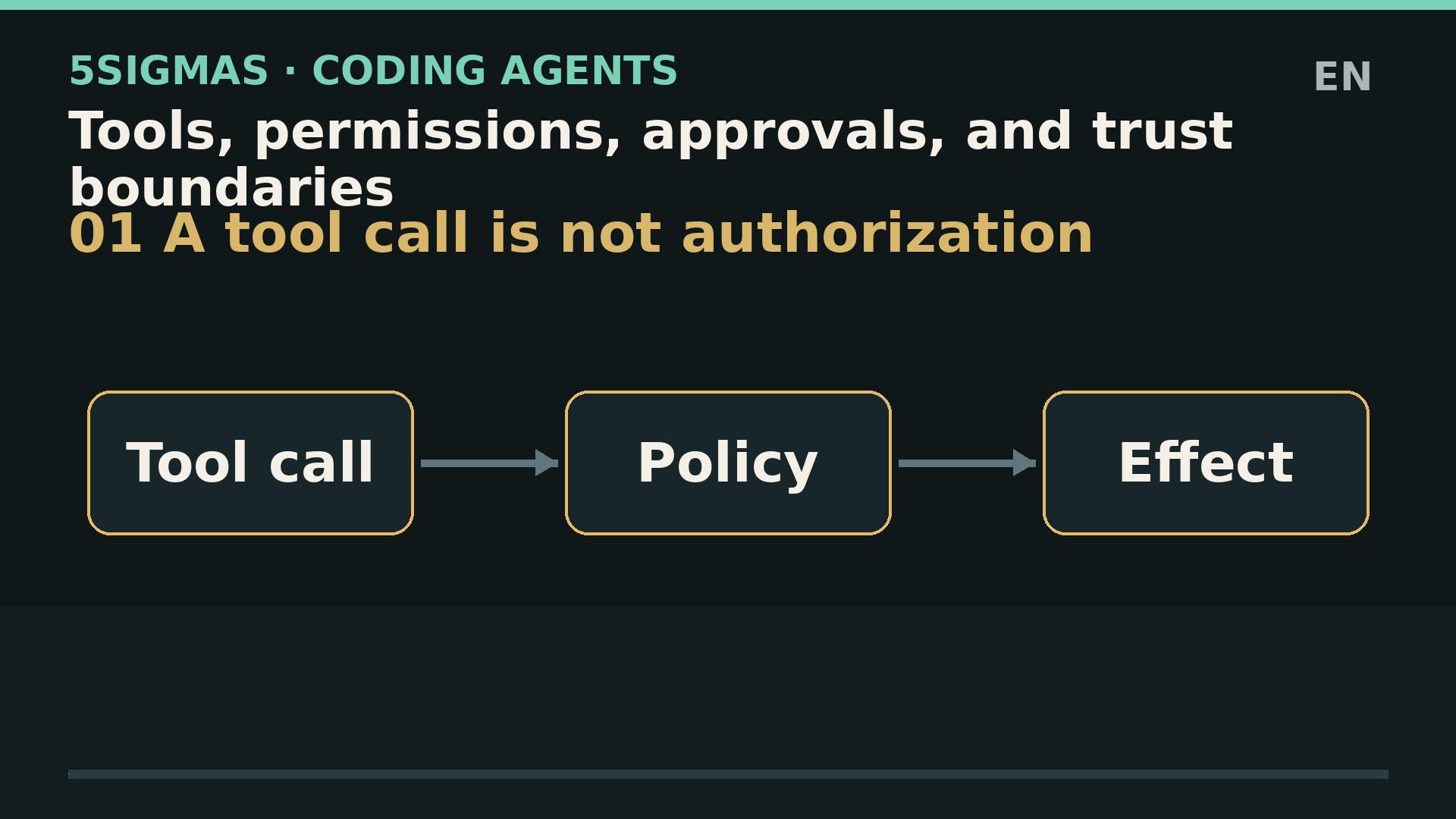 2:12
2:12
Tools, permissions and trust boundaries
The tool list describes capability. The effective boundary determines which effects can occur.
The right question is not “which tools does the agent have?” · Tool availability and permission are different controls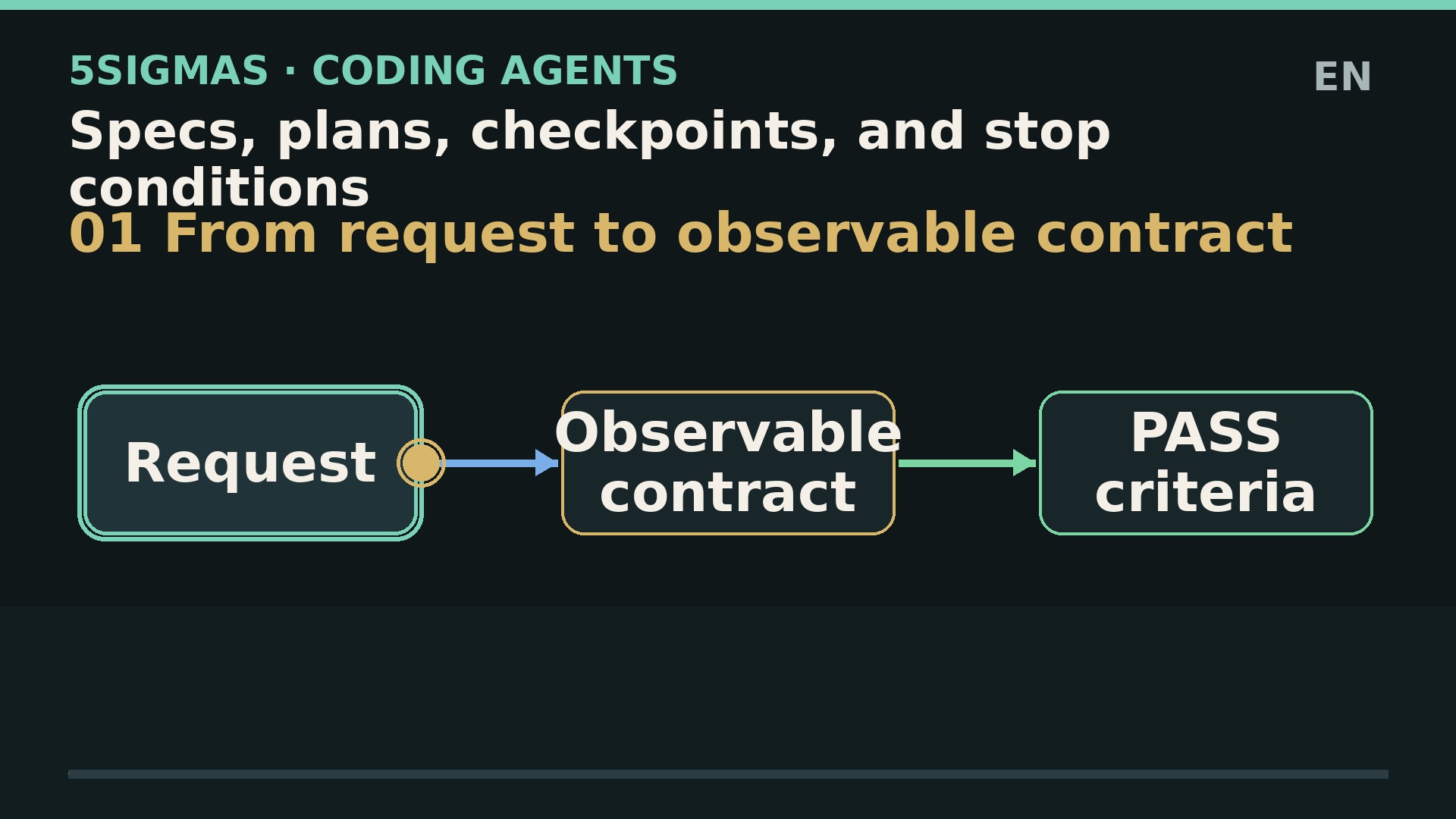 2:12
2:12
Specs, plans and checkpoints
Those conditions let us reject an implementation that satisfies only half the request.
A request is not yet a contract · Persistent instructions and a task spec solve different problems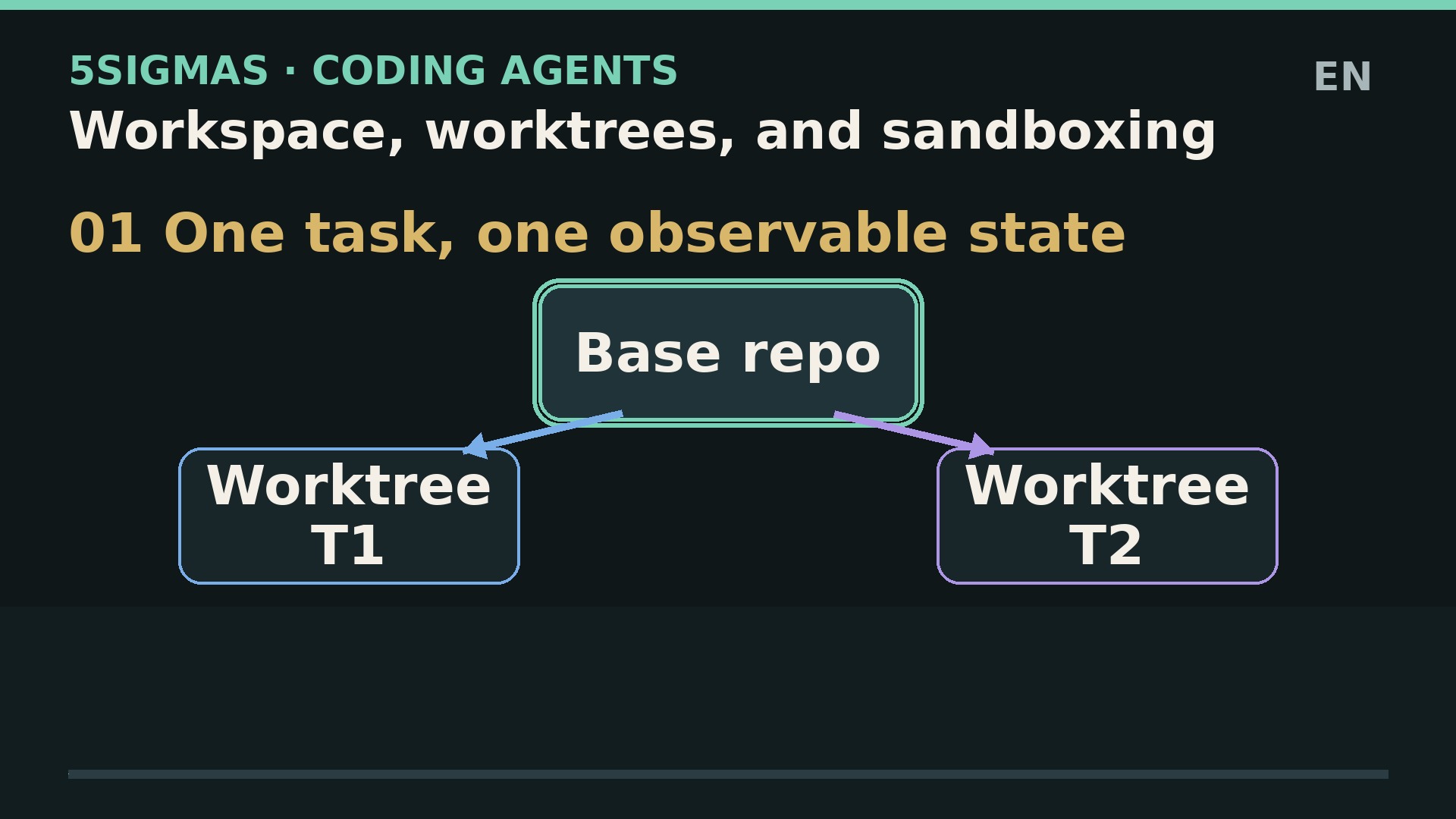 2:10
2:10
Context, workspace and isolation
A separate copy does not prove confinement. Both boundaries need checking.
Five objects worth naming separately · 1. Repository and base revision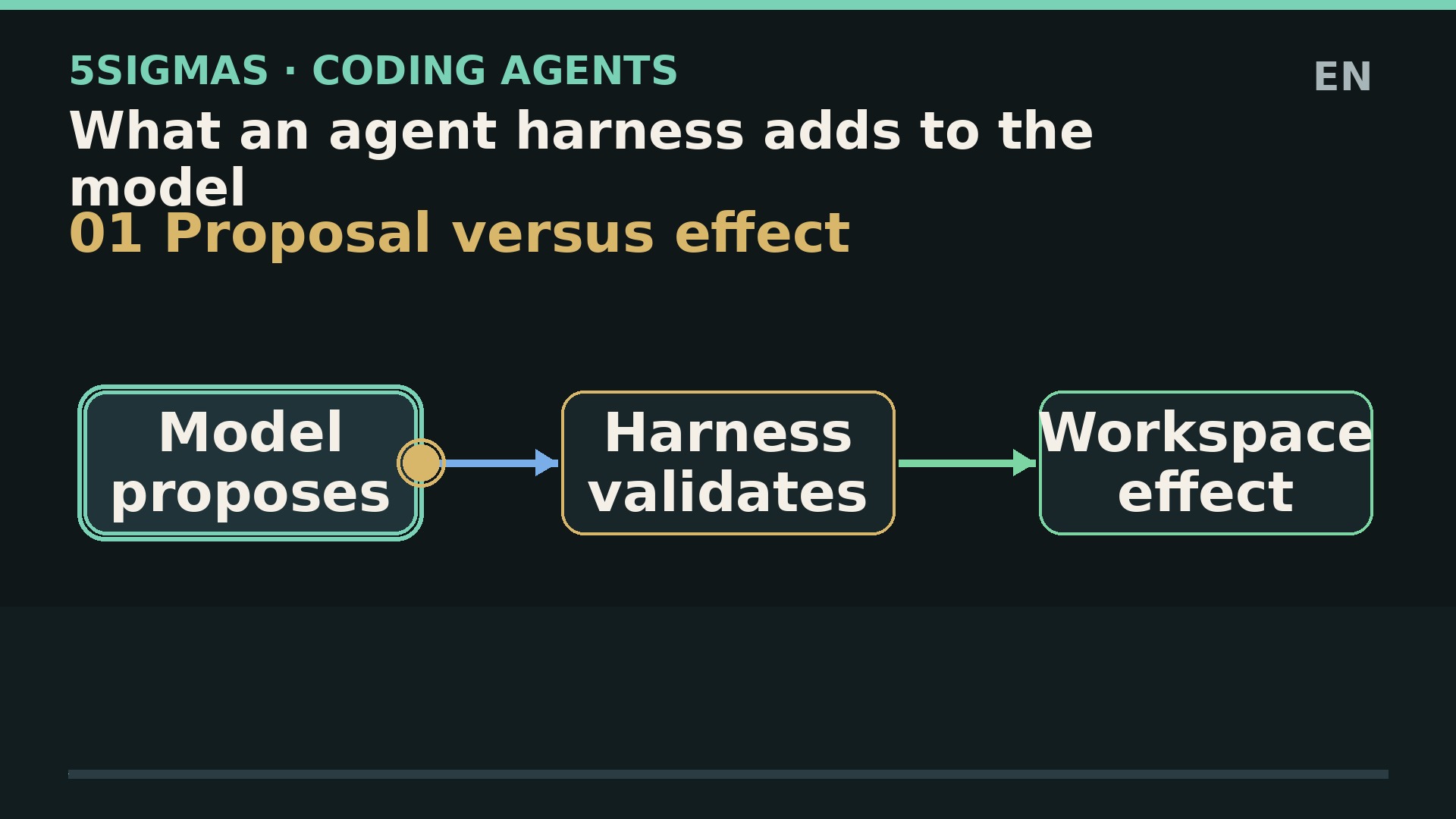 2:10
2:10
The model and the harness
Only then is there a real result: output, errors and an exit code.
The model does not own the repository · 1. Model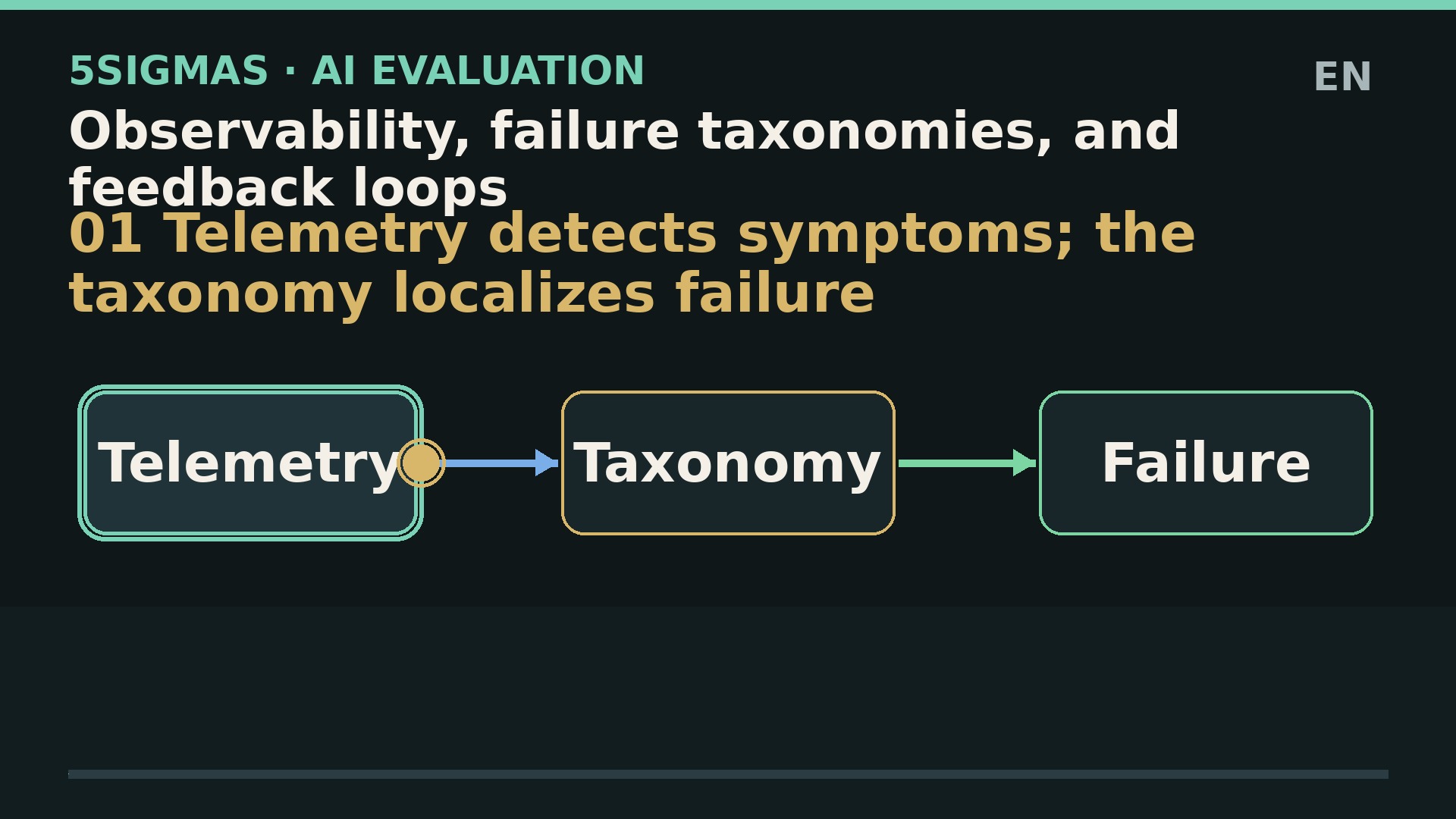 2:14
2:14
From incident to repair
After release, measure recurrence and exposure over the agreed observation window. Close the loop with production evidence and an accountable owner.
Observability and evaluation answer different questions · Preserve a reproducible system identity first 2:14
2:14
Evidence before expanding
A violation blocks; insufficient data keeps the rollout paused. Choose stages for the change and its risk; not every release needs them all.
Before exposing traffic, define the unit of change · Shadow: observe the candidate before giving it authority over the response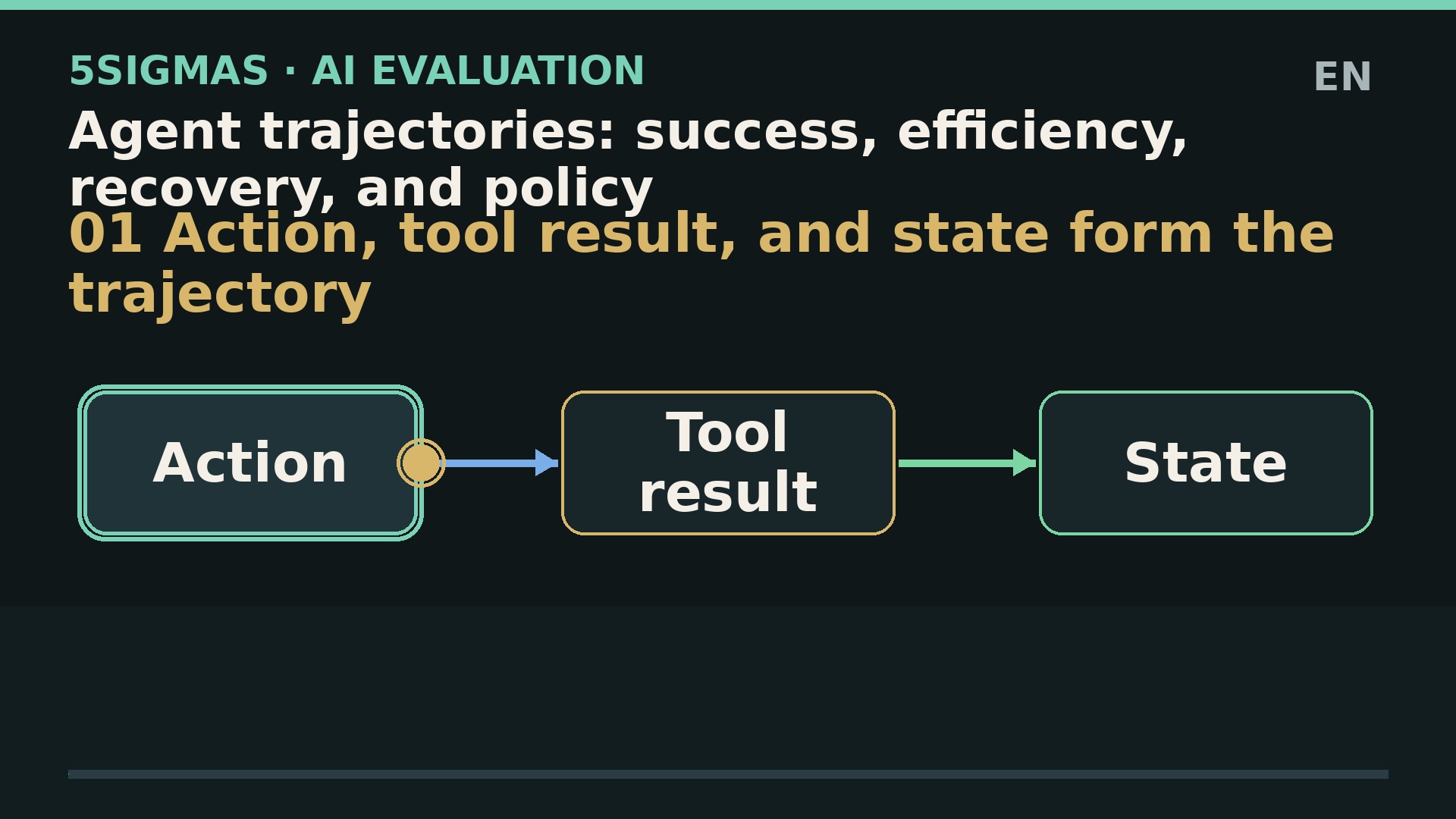 2:16
2:16
The result and the path
A hard violation blocks release even when other metrics improve. Save the trajectory and the verdict reason so the result is reproducible.
A trajectory is a sequence of transitions, not a list of tool names · Start with the outcome: was the task actually solved?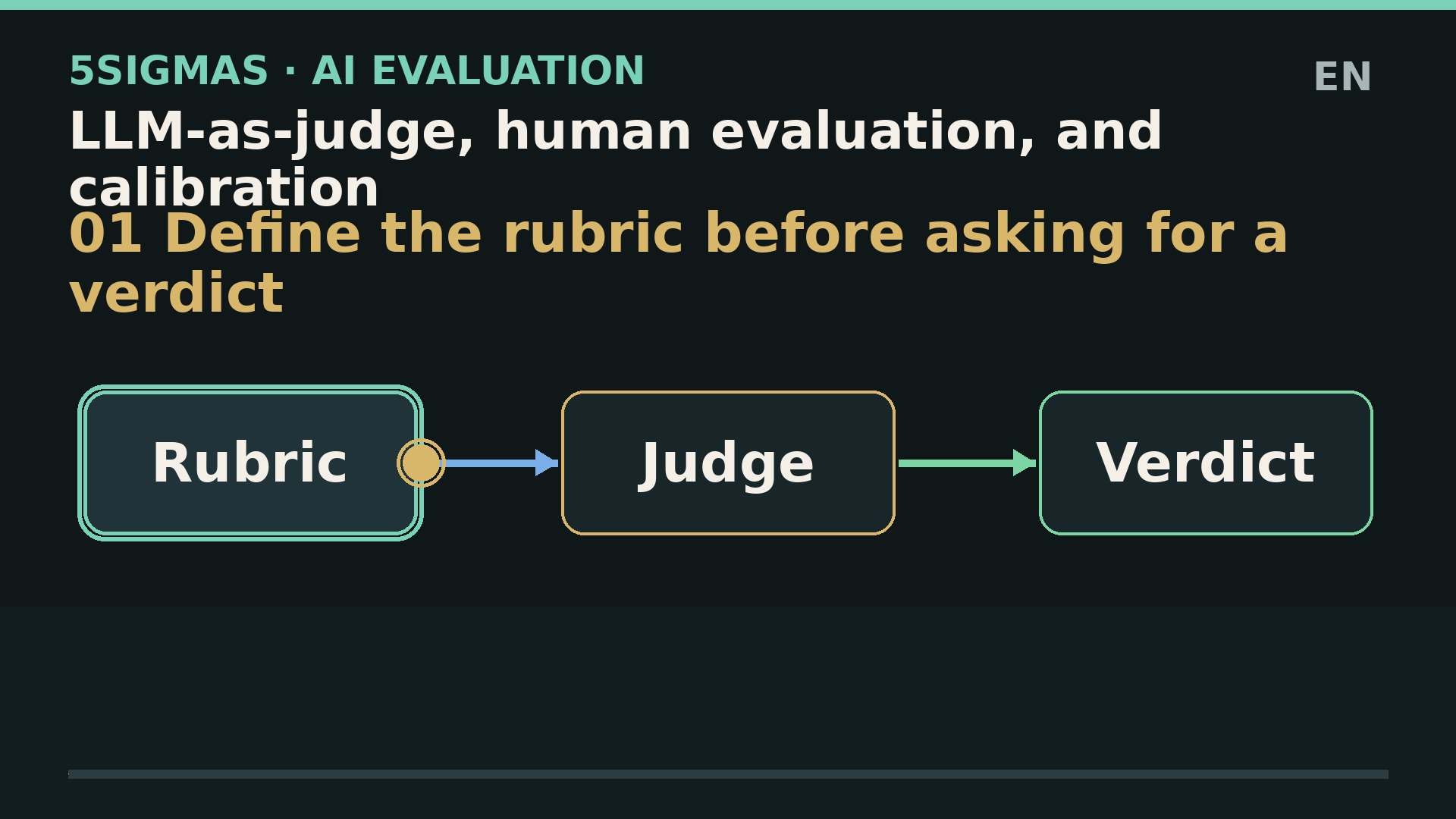 2:14
2:14
How to evaluate the evaluator
Freeze the judge version before testing it on a separate set. Accept, restrict or reject its use according to risk and evidence.
Define what "calibration" means first · Choose the narrowest grader that answers the question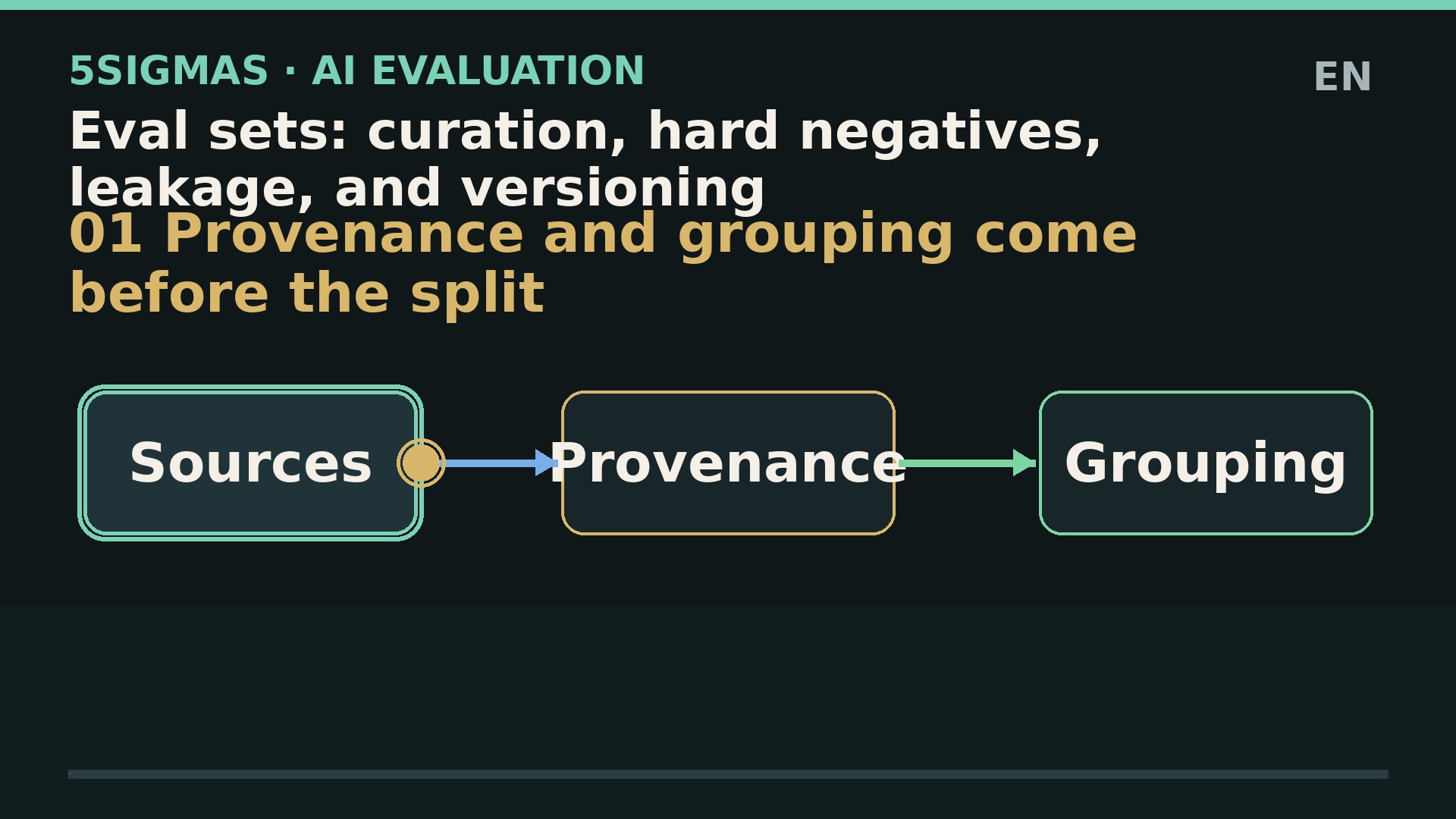 2:14
2:14
Cases that test the system
Changing a label or grader can change the score without improving the model. Create a new version; do not silently rewrite the earlier result.
The object is an eval release, not "the dataset" · The smallest unit must be auditable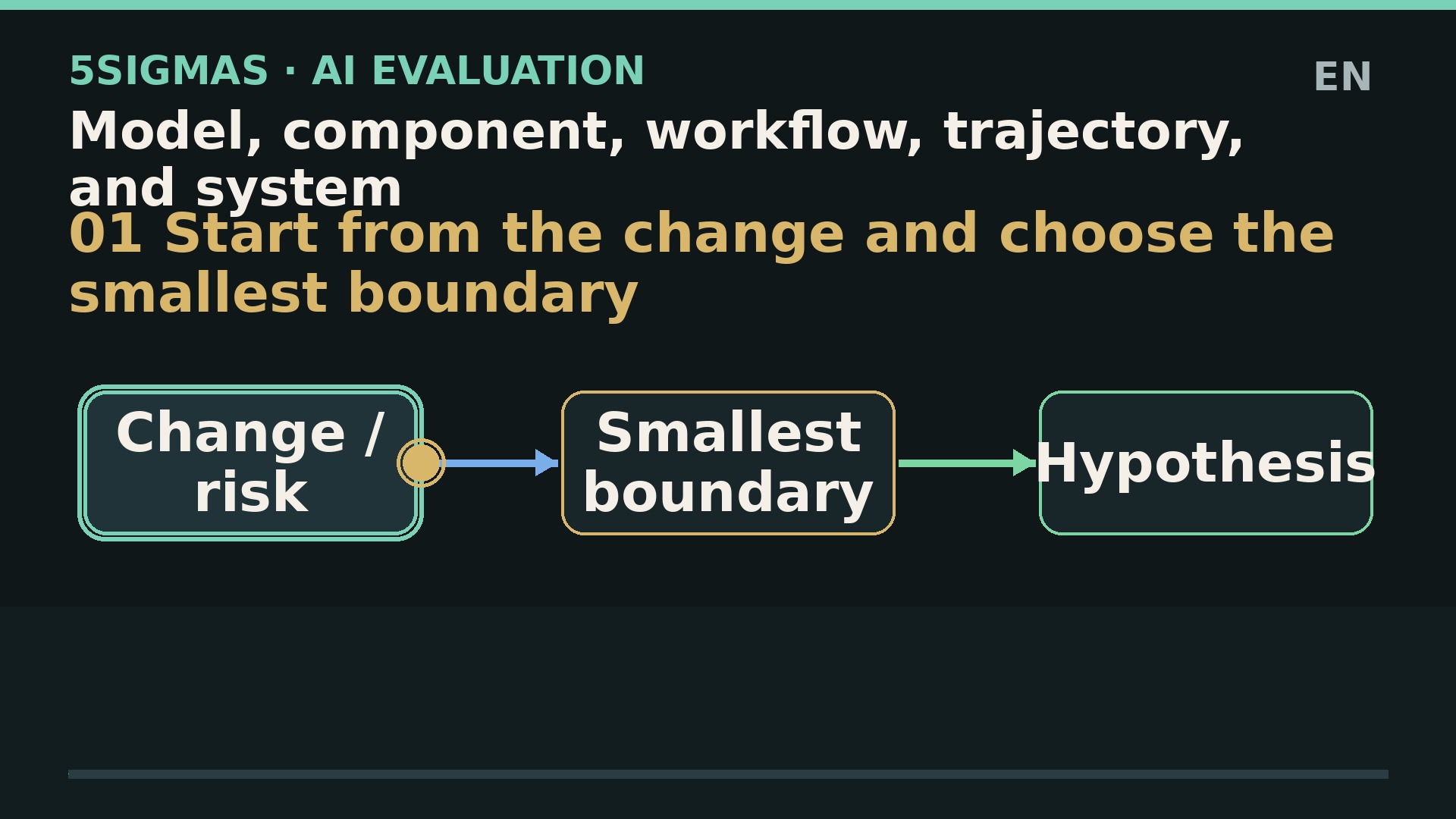 2:12
2:12
What are we evaluating?
A broader test checks the task, policies and real effects. Preserve versions, cases and protocol to make comparisons reproducible.
Start by defining the object, not the metric · Level 1 — Evaluate the model 1:30
1:30
Production Controls
How least privilege, independent authorization, kill paths, observability, and evidence-bound release gates limit damage when the model fails.
Separate document reading from actions · Give every tool only the permissions it needs 1:30
1:30
Red Teaming
How to test the full causal path from adversarial input to authorization, external effect, recovery, and a reproducible release regression.
The threat model comes before the benchmark · Separate what the model can do from what the system executes 1:30
1:30
Poisoning
How untrusted input can become persistent memory, re-enter a later decision, and survive naive deletion through derived state.
Storing data does not make it trustworthy · Persistent memory is already a measurable attack surface 1:30
1:30
Jailbreaks
How repeated and adaptive prompt attempts change the attack surface, and why authorization and attempt limits still matter after a refusal.
Refusing a request does not create a perfect boundary · Trying many variants changes the cost of the attack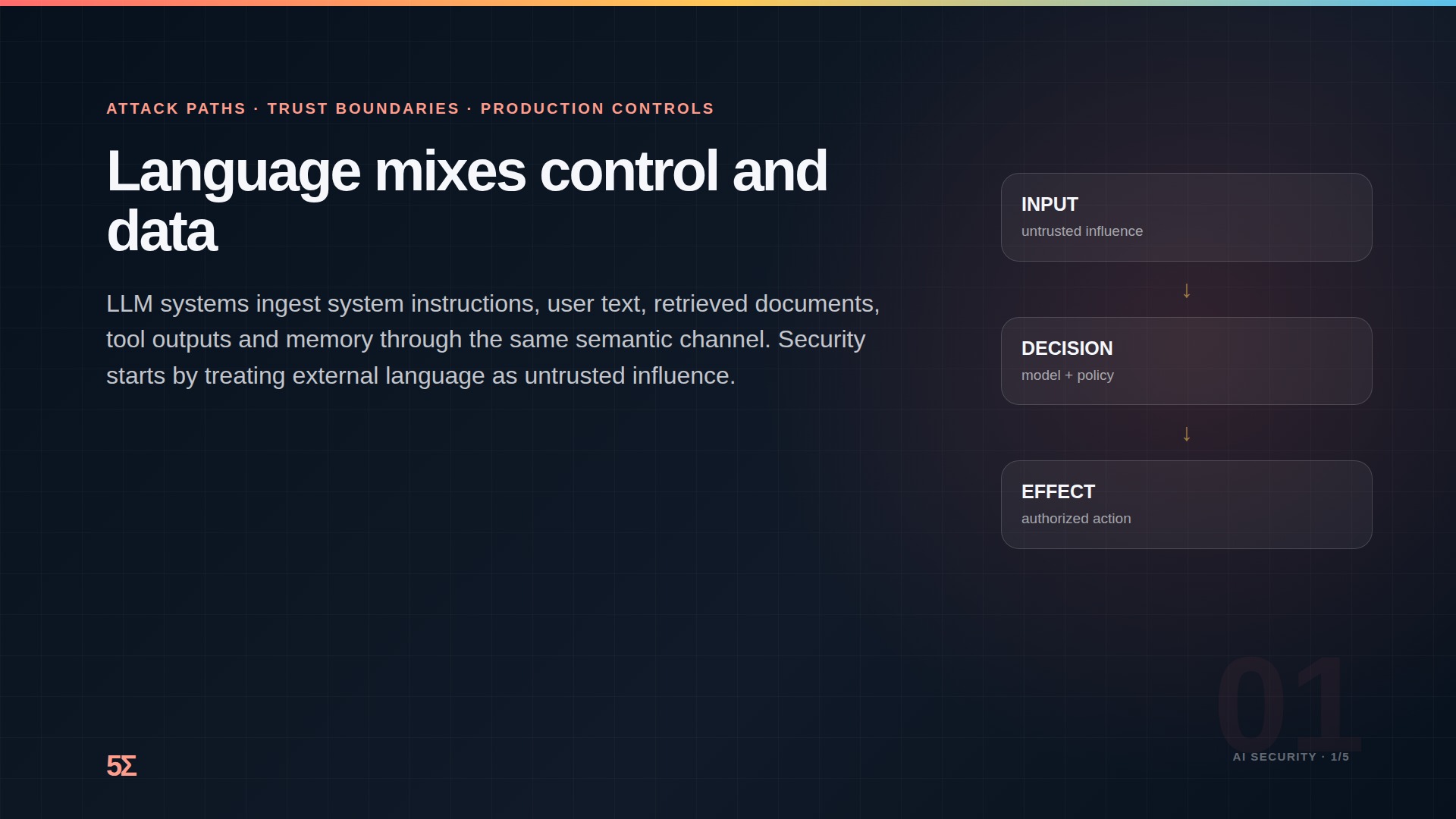 1:30
1:30
AI Security
How untrusted input can influence an AI system and which authorization boundaries limit whether that influence becomes an action.
1. An instruction hidden in a document can change what the system does · 2. Asking the model to ignore its limits 2:18
2:18
From demo to production
Reserve model decisions for the part that depends on the situation. Keep boundaries, verification and an operable fallback around that part.
Budgets before promises · Retries, idempotency, and terminal failures 2:12
2:12
Security and authorization
Tool restrictions must still constrain execution. Combine controls and auditing; this example does not guarantee immunity.
Direct and indirect prompt injection · Authorization must live outside the prompt 2:14
2:14
How to evaluate an agent
Separate task permissions from the verifier’s resources. Record out-of-scope attempts and inspect the trajectory.
The unit of evaluation is a task · Four dimensions worth measuring 2:14
2:14
Tools, memory and state
Keep its provenance and check evidence before using it. Memory needs rules for correction, expiration and deletion.
The minimal loop · Tool calling: from text to a contract 2:12
2:12
What an agent is
The tool result identifies draft D4 and its state. Check that evidence and stop without taking extra actions.
A scale of autonomy · 1. Direct response 2:12
2:12
AI agents
Conversation can continue while the tool is working. Only a verified result supports reporting that the task finished.
Contents · 1. What an agent is—and is not 2:16
2:16
The real footprint of a data center
Reusing components can extend service without eliminating every impact. Compare alternatives for the same useful work over the complete lifecycle.
1. The comparison that calibrates the conversation · 2. Water: withdrawal, consumption and the technology that determines it 2:12
2:12
What orbital computing means
Include link coordination, failure handling and retirement at end of life. The proposal must explain who operates it, who is accountable and how it ends.
1. What it means to process data in orbit · Processing observation data 2:18
2:18
Power, heat and connectivity
Error correction and redundancy help within their limits. An unrecoverable failure needs another plan; maintenance is not free.
1. Why the cold of space does not mean free cooling · The real scale of radiators 2:14
2:14
Why now?
Change one assumption and calculate the budget again. Do not present the optimistic scenario as an achieved price.
1. The explosion in compute demand · 2. Terrestrial bottlenecks 2:12
2:12
Data centers in space
Include power, cooling, links, launch and end of life. One local advantage does not prove that the whole system is better.
Contents · 1. Why now 1:30
1:30
Prompt Injection
How an instruction hidden in a document can enter an AI system and which controls separate reading from action.
1. The problem starts when a document reaches the model · 2. The instruction can enter through retrieval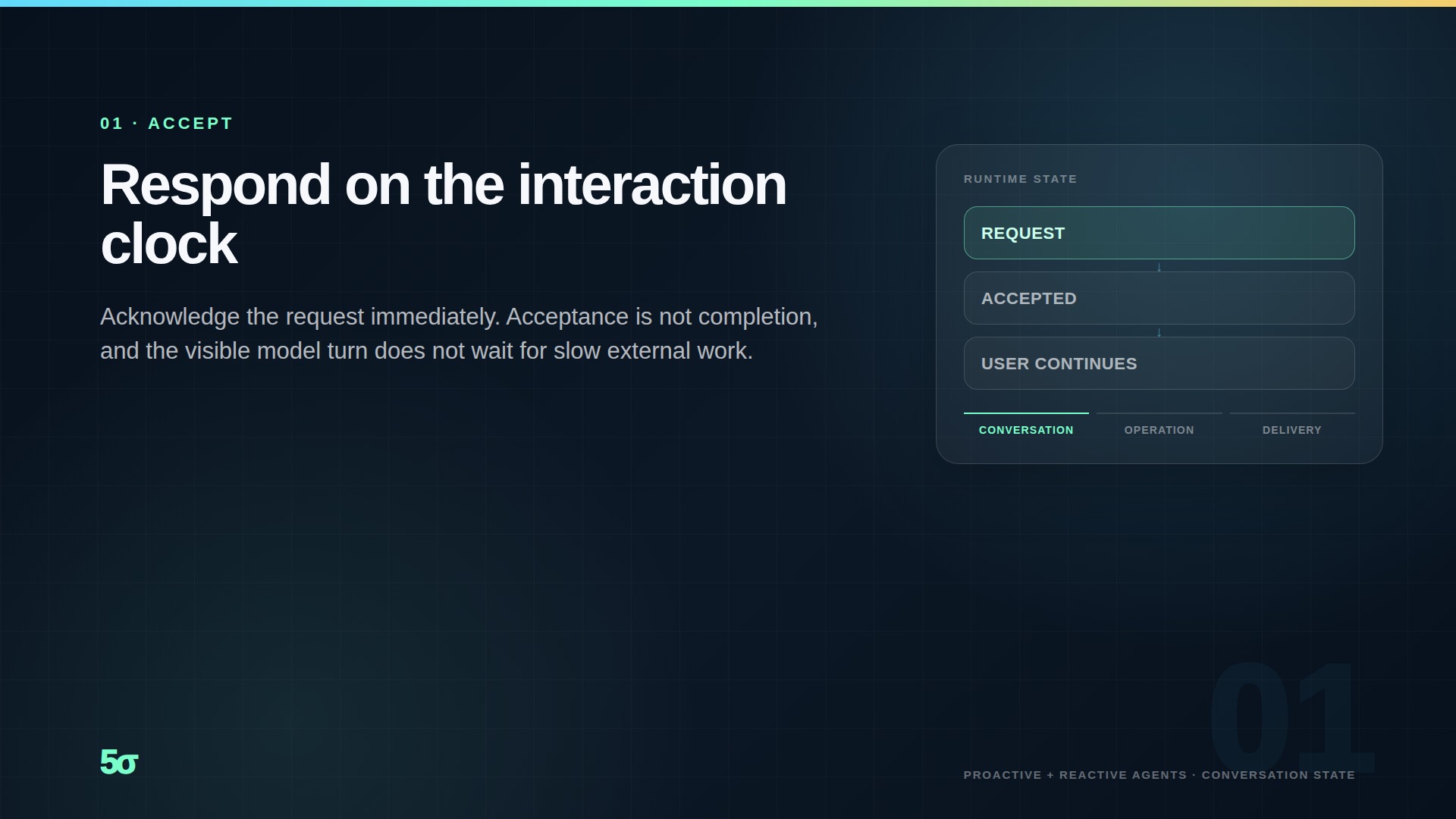 0:20
0:20
Proactive and reactive agents and tool calls
A technical walkthrough of Reactive / Proactive Agent and the conversational contract it encapsulates: immediate response, asynchronous work, and deferred completion.
The problem is not the tool, but time · The first turn accepts work; it does not promise results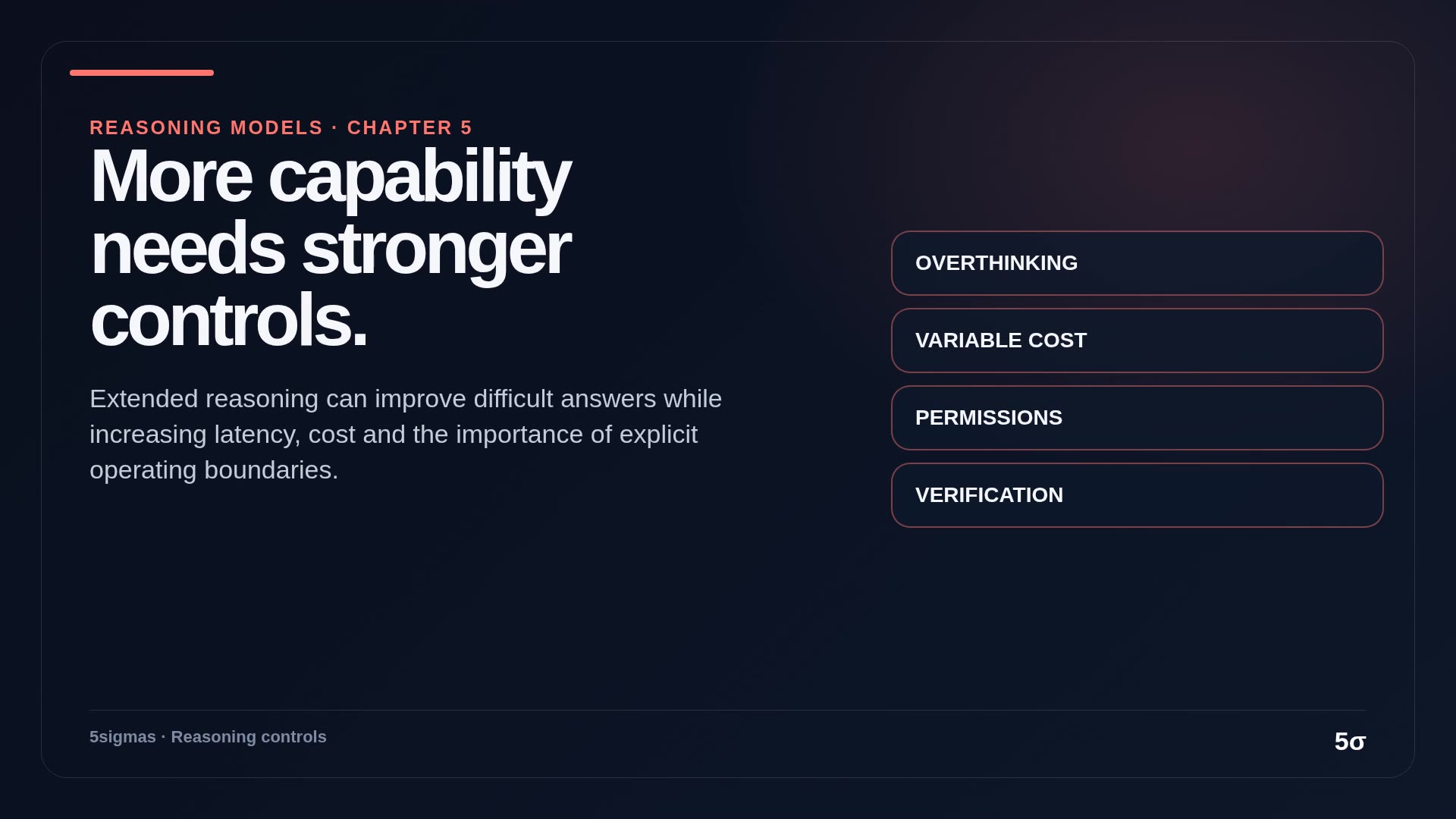 2:01
2:01
Reasoning Risks and Production Controls
Overthinking, prompt injection and agent hijacking in reasoning models with tools. Design criteria for bounding risk in production.
1. Overthinking: when more reasoning degrades the answer · 2. Quality vs cost vs latency in a real product 1:55
1:55
Latency, Streaming and Product Design
TTFT, streaming and perceived-latency thresholds in reasoning models. RouteLLM, design patterns and production session-cost management.
1. Perceived-latency thresholds · Dynamic routing: RouteLLM 2:09
2:09
Test-Time Compute
Test-time compute as a second scaling axis. The three levers—more steps, more candidates and more structure—and their quality, cost and latency tradeoffs in reasoning models.
1. What test-time compute is and why it matters · 2. The three levers 1:02
1:02
AI and GDP Today
Why AI's macroeconomic impact takes time to appear in GDP, where it appears earlier, and which signals best indicate what is already changing.
1. Why macro impact takes time to arrive · The four mechanisms behind the lag 1:48
1:48
How Reasoning Fails
Sycophancy, shortcut learning, specification gaming and cascading failures: the failure modes of reasoning models, how to detect them and how to mitigate them.
1. Failure types · 1.1 Shortcuts — shortcut learning 1:02
1:02
Measurement: GDP vs Well-being
Why GDP does not capture real well-being, which dimensions matter most, and when subjective well-being diverges from material well-being.
1. What GDP measures and what it leaves out · What GDP leaves out 1:22
1:22
What It Means for an LLM to Reason
What reasoning means for a language model, what o1 and DeepSeek R1 added, and why evaluating reasoning requires looking at steps, cost and failure modes.
1. What "reasoning" means for a human · 2. What LLMs can do that looks like reasoning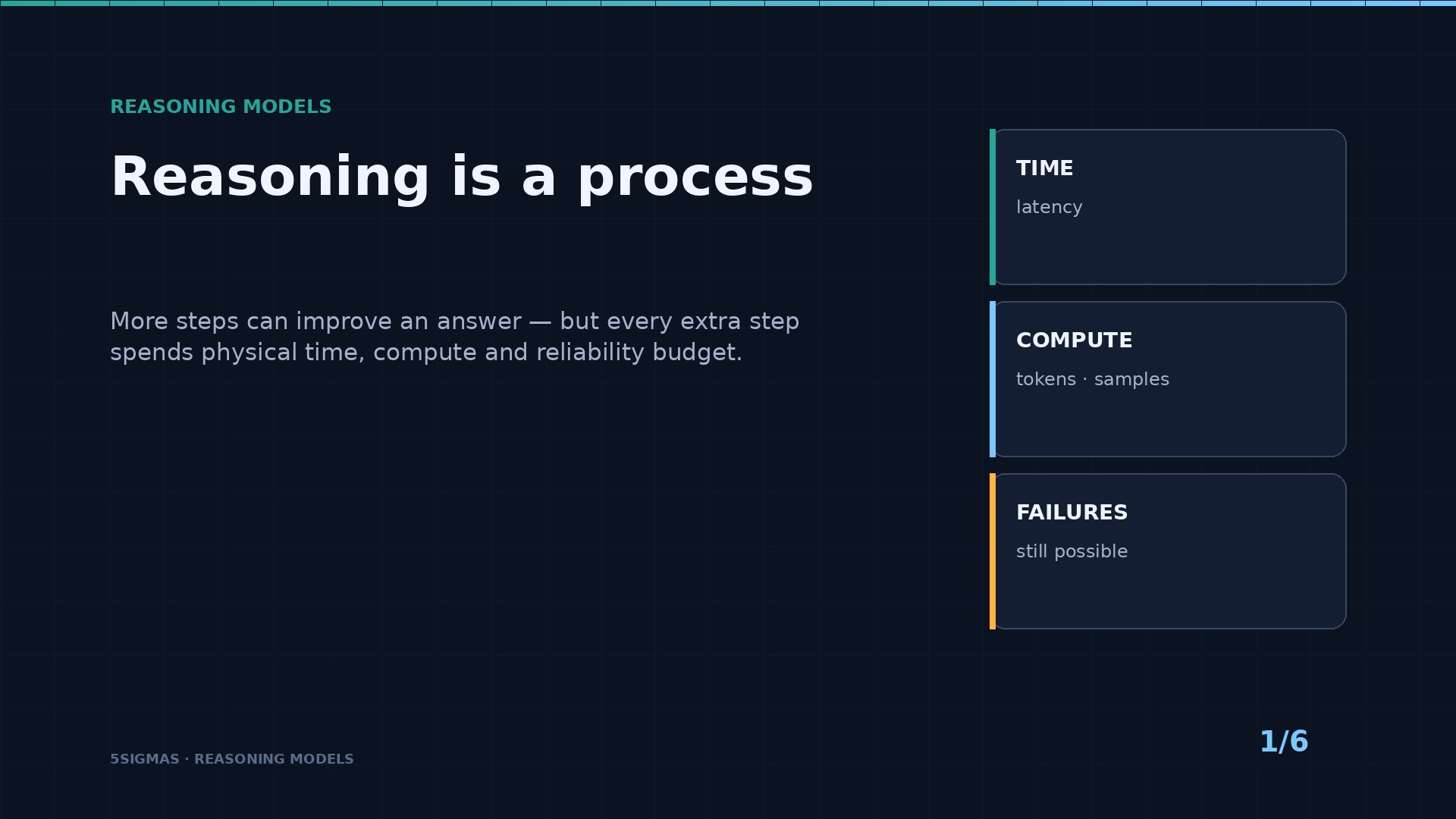 1:15
1:15
Reasoning Models
Five chapters on how LLMs reason: test-time compute, failure modes, latency, cost and risks when models use tools.
Contents · 1. What "reasoning" means for an LLM 1:02
1:02
AI as an Electrical Technology
What AI implies in compute and energy terms, why demand can grow even as hardware improves, and where the real bottlenecks are.
1. What "compute" means in practice · Training 1:02
1:02
Electricity and Well-being
Why reliable, affordable electricity enables real gains in health, logistics and industry, and why supply quality matters as much as kilowatt-hours.
1. The four main channels · Health 1:02
1:02
AI, GDP, Well-being and Energy
Quantitative analysis of AI's impact on energy, productivity and well-being using real World Bank, IEA and Penn World Table data rather than speculative projections.
Contents · 1. Electricity → well-being: the real mechanisms 1:03
1:03
AGI: Artificial General Intelligence
AGI means artificial general intelligence. This chapter explains its definitions, DeepMind's and OpenAI's levels, and what would still be required to reach it.
1. The definition problem · 2. The definitions in dispute 1:03
1:03
Classical AI vs Generative AI
Technical comparison between classical AI and generative AI: inputs, outputs, determinism, explainability, and when to use rules, ML, LLMs, RAG, or agents.
1. The five differences · 1.1 Inputs and outputs 1:03
1:03
What is Generative AI?
How generative AI works: from embeddings and the Transformer to foundation models. Scaling laws, LLMOps, and differences between LLMs, RAG, and agents.
1. Embeddings: Turning text into numbers · 2. The Transformer: The architecture that changes everything 1:03
1:03
What is AI?
What Artificial Intelligence is, how it works and how it evolved: from heuristics and Machine Learning to neural networks and foundation models.
1. The General Framework: AI, ML, DL and GenAI · 2. How do these systems learn? 0:53
0:53
AI and Generative AI Foundations
Introductory series on AI and generative AI: what they are, how they work, how they differ and what AGI means. For technical professionals and decision-makers.
Contents · 1. What AI is and how it evolvedNo videos match this search.