See AI.
Understand how it actually works.
Each topic connects a short video, an interactive animation, a technical chapter and the original sources. Build intuition first. Then manipulate the mechanism, test its limits and go deeper into the evidence.
 If you do not know where to begin
Understand AI from first principles
If you do not know where to begin
Understand AI from first principles
Separate software, machine learning, deep learning and generative AI before moving into agents, reasoning or infrastructure.
Watch the first explanation 1:03 →Why 5sigmas?
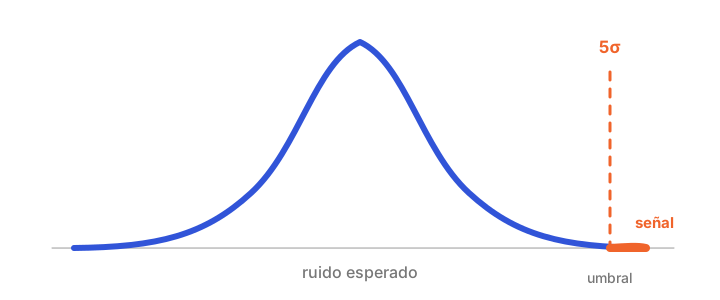
In particle physics, a result is conventionally treated as a discovery only when it reaches five-sigma significance: a threshold stringent enough that the probability of mistaking an extreme fluctuation for a real signal is roughly one in 3.5 million.
5sigmas applies the same editorial principle to artificial intelligence: separate durable knowledge from daily noise, demand evidence, and build judgment before accepting a narrative, tool or promise.
Choose how to continue
Experiment with tools →Core concepts
Direct answers to the ideas behind modern AI.
Visual explanations
View all →
Choose a path
View the learning map →Engineering
Proactive and reactive agents and tool calls
How to separate the conversational contract, internal execution and deferred completion without turning conversation history into the system database.
Open the note →